Book a call


Bonica, a global consulting firm specializing in data-driven marketing decisions, partnered with us to simplify and modernize their internal “Marketing Test Platform” — a suite of analytical tools used by consultants to evaluate media test feasibility, compare regional markets, and analyse experiment results.
The original tools existed partly in Excel, partly in standalone internal interfaces, and relied heavily on manual effort, deep statistical knowledge, and inconsistent workflows. Our objective was to consolidate them into a unified web-based experience that any consultant could use with minimal onboarding.
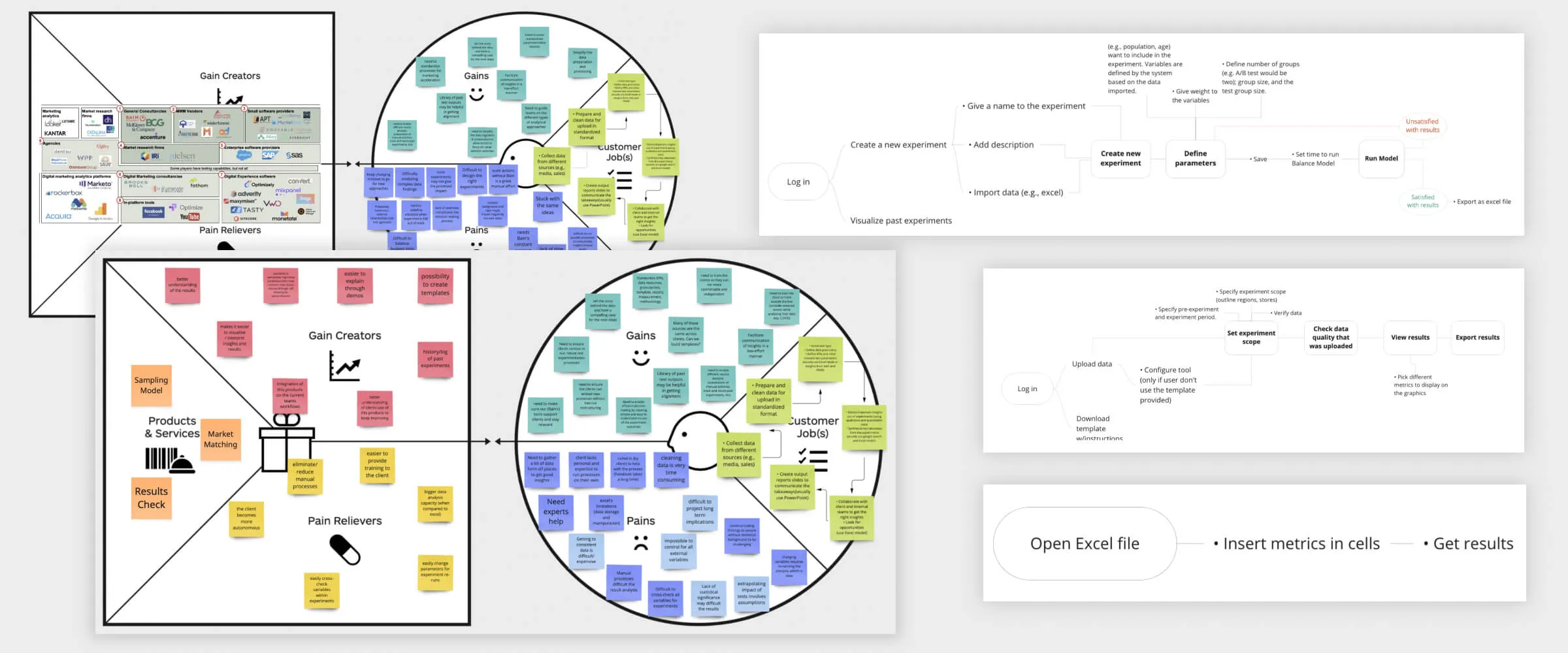
Across Bonica’s global teams, the Marketing Test Platform had grown organically over several years, resulting in three separate tools built by different case teams, across multiple clients, in different formats. Some lived in Excel, others in internal prototypes, and others as legacy interfaces with inconsistent terminology, workflows, and validation rules. This fragmentation led to significant manual effort, variability in outputs, and a steep learning curve for consultants and client teams.
The analytical complexity of the tools—market matching, power calculations, results analysis, and feasibility checks—required a high level of statistical fluency. With no unified structure, users were often unsure how to prepare data, interpret assumptions, or confirm test feasibility with confidence.
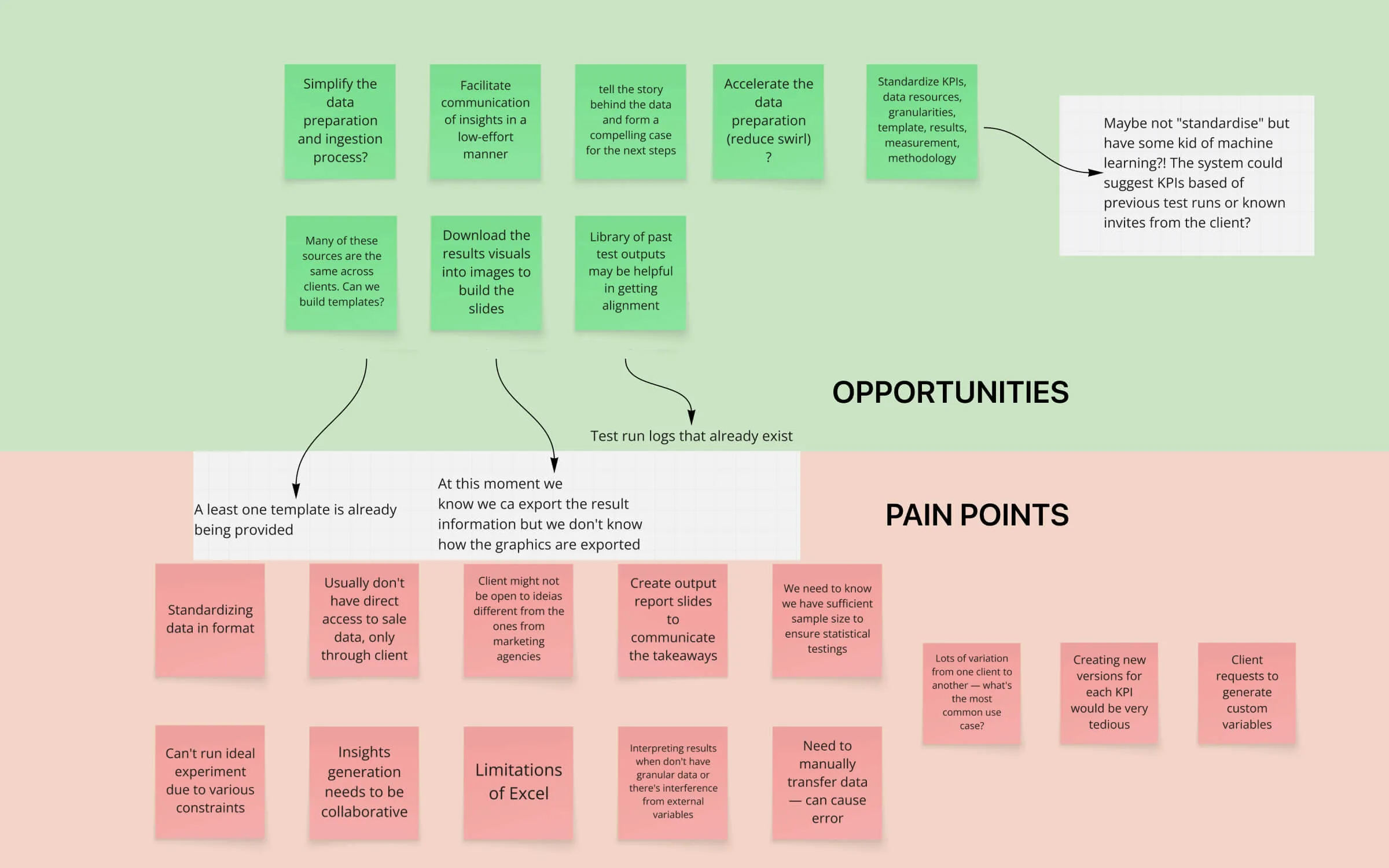
To bring order and clarity to this ecosystem, we began with a deep discovery phase: analysing dozens of files, calculators, and legacy prototypes used across different clients and industries. We reviewed UX artefacts from internal workshops, persona definitions, user journeys, and pain-point maps created by Bonica’s product and strategy teams. This research helped us understand how frontline teams prepared data, validated test setups, monitored experiments, and generated insights.
We consolidated all findings into a unified workflow that aligned terminology, standardised inputs, normalised validation steps, and reduced cognitive load. From there, we introduced a structured experience layered with contextual guidance, visual guardrails, progressive disclosure, and clear navigation, making the tools accessible to both consultants and client-side analysts with varying levels of analytical expertise.

Redesigning four complex analytical tools into a unified, guided experienc
The redesign centred on four core tools: Market Matching, Results Check, and the legacy Sampling Model. Each tool involves complex analytical reasoning, strict data validation, and numerous parameters that influence feasibility and test reliability.
We introduced a unified structure with clear step-by-step flows: data upload, validation, configuration, modelling, and interpretation. Each step includes contextual explanations, embedded guardrails, and dynamic feedback to help users spot inconsistencies early. Visual summaries, validation indicators, and pattern-driven UI components ensure consistency across the toolkit and enable consultants and client analysts to work more quickly and confidently.
The final experience not only modernised the interface but also codified Bonica’s methodology in a scalable, repeatable, and user-friendly platform that reduces manual work and increases clarity across experimentation workflows.

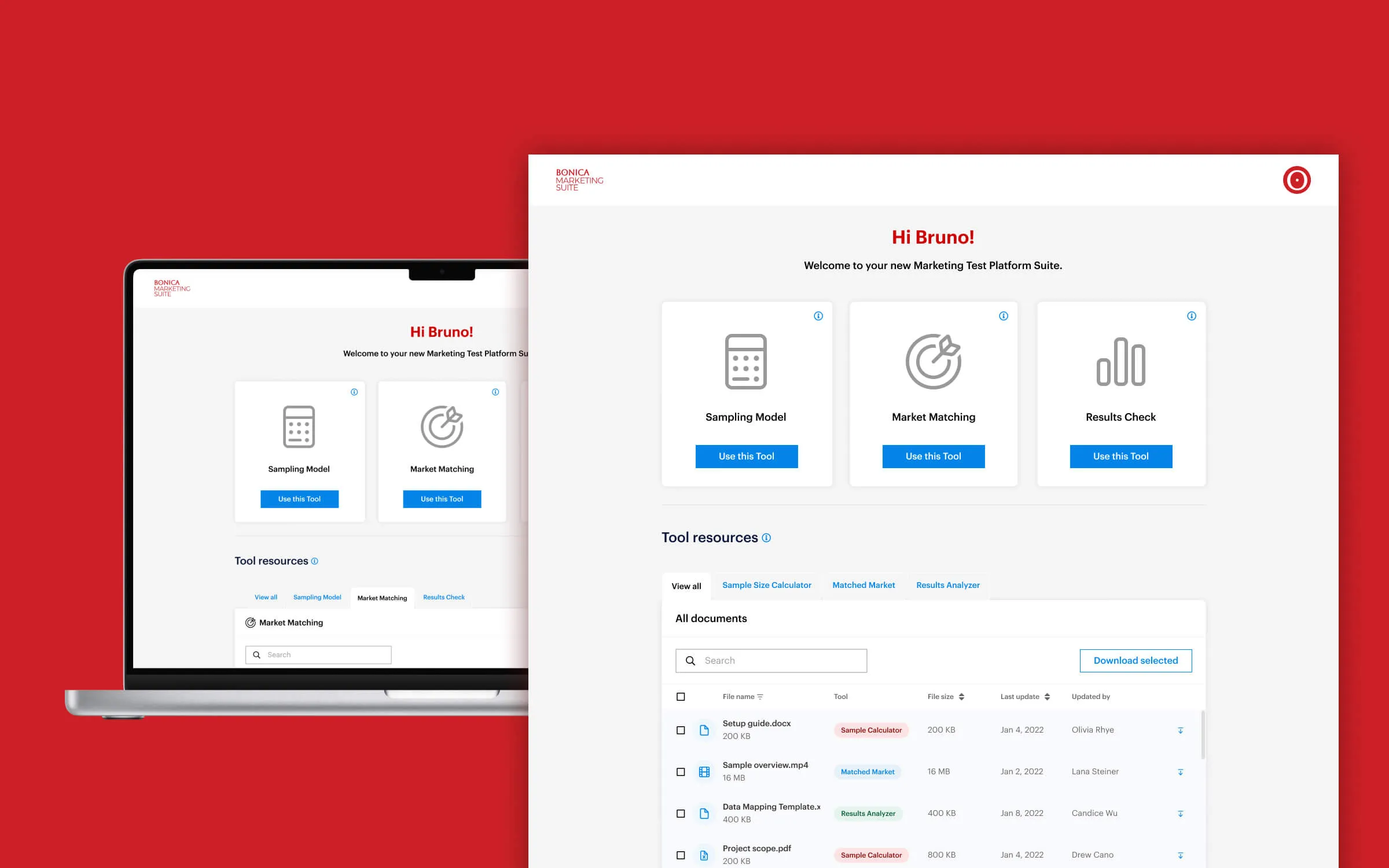
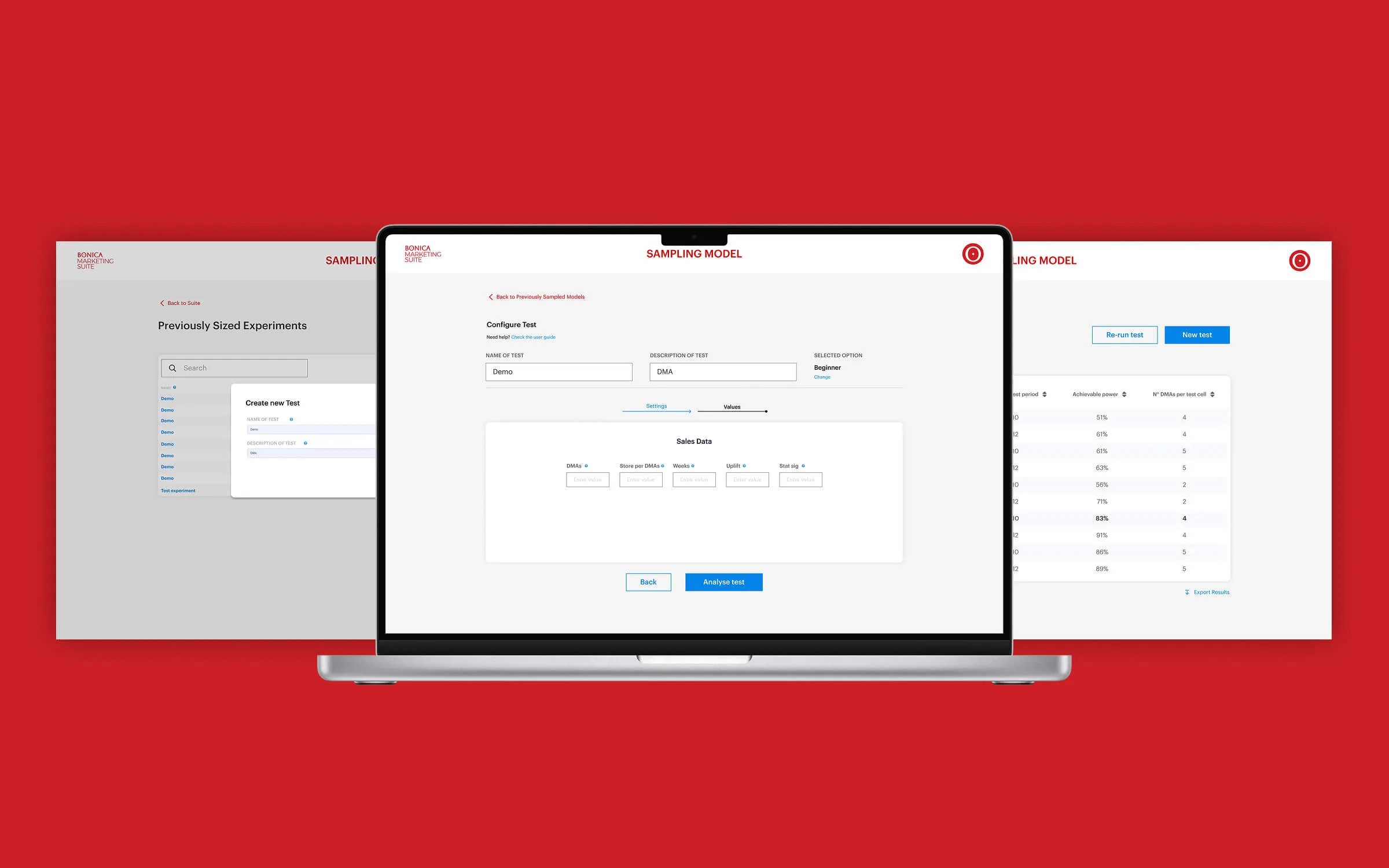
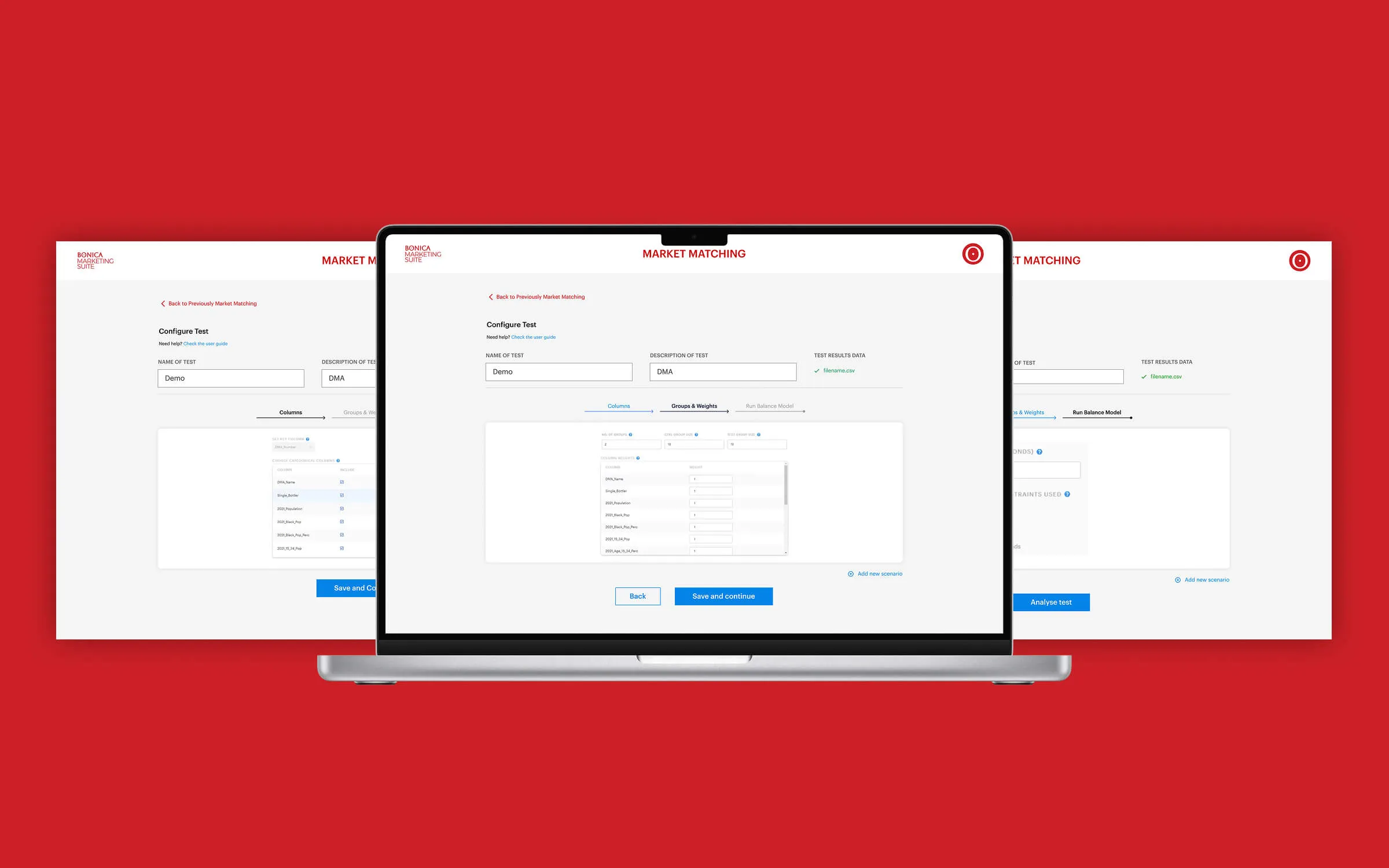
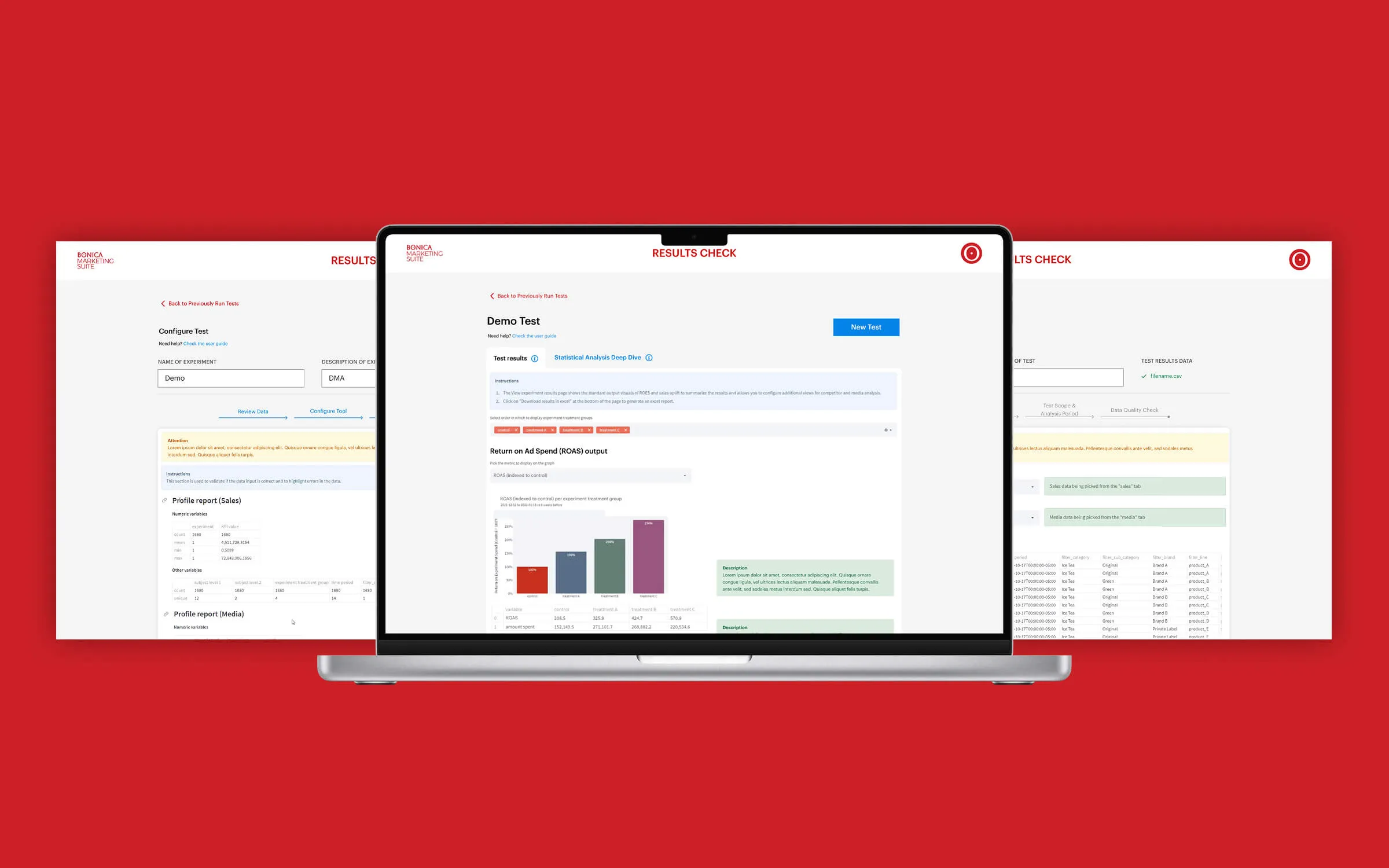
The final delivery was a unified, scalable platform that consolidated three independent tools under one design system. The experience now supports consultants in determining feasibility, selecting markets, analysing uplift, and generating structured reports — with far less manual effort and significantly improved clarity.
Delivering a cohesive toolkit that scales
The redesign highlighted the importance of bringing consistency to analytical workflows. Standardising terms, validation steps, and data interpretation patterns enabled a more reliable and efficient process. By transforming scattered artefacts into an organised toolkit, the foundation is now prepared for future automation and deeper integration with datasets.

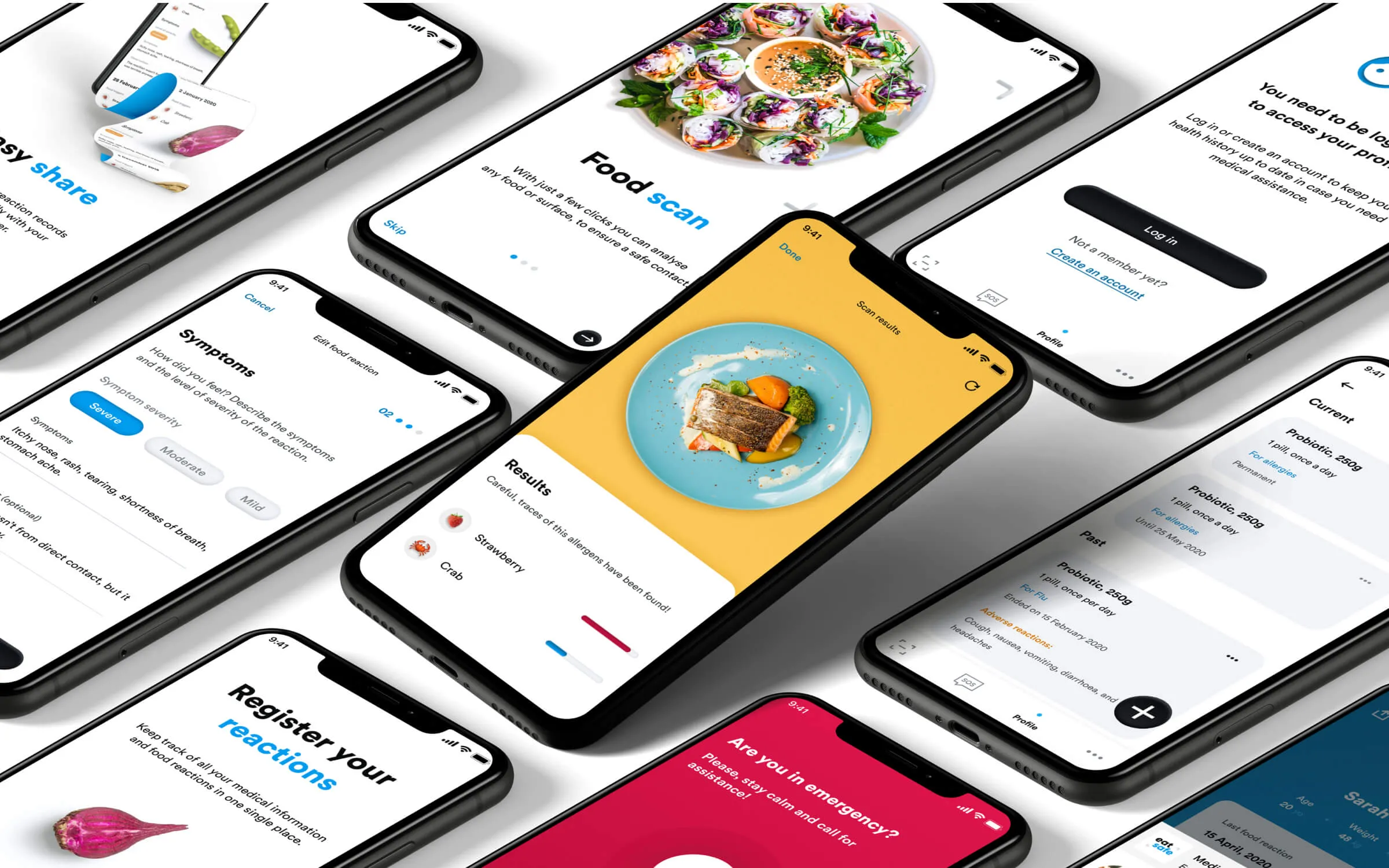
A food-safety app concept helping users scan ingredients, and detect allergens through a health-centred design system.
A machine-learning collaboration platform redesigned for clarity, enabling engineers and domain experts to explore datasets, label inputs, and improve model accuracy.