Book a call

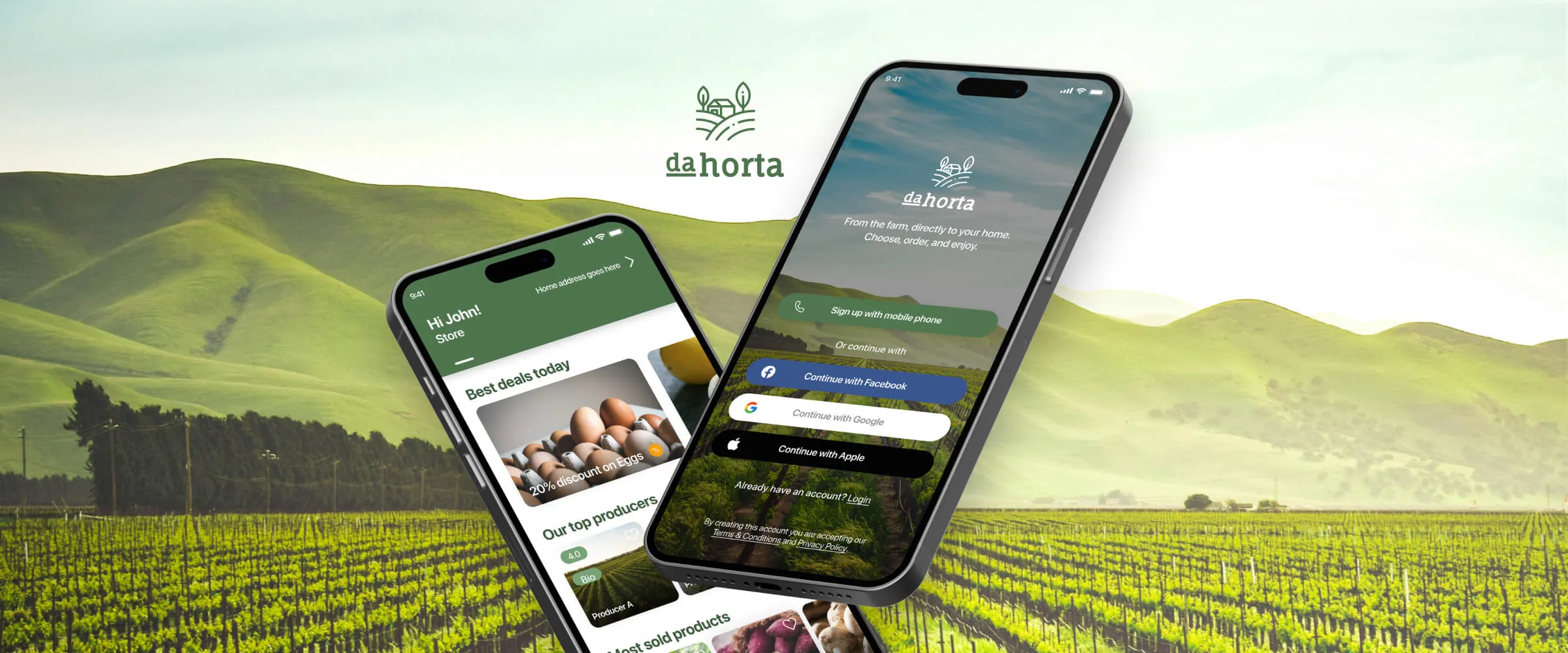
Da Horta (“From the farm”) is a mobile app concept designed to connect local farmers directly with consumers. Built as a multi-sided marketplace, it helps users discover, order, and receive fresh local products at home — cutting intermediaries and supporting sustainable business models.
The goal was to merge proximity commerce with digital efficiency, creating a platform that gives farmers visibility and consumers quality, traceability, and trust in what they eat — especially at a time when COVID exposed the fragility of traditional food distribution. The result is a system that balances environmental awareness with everyday convenience.
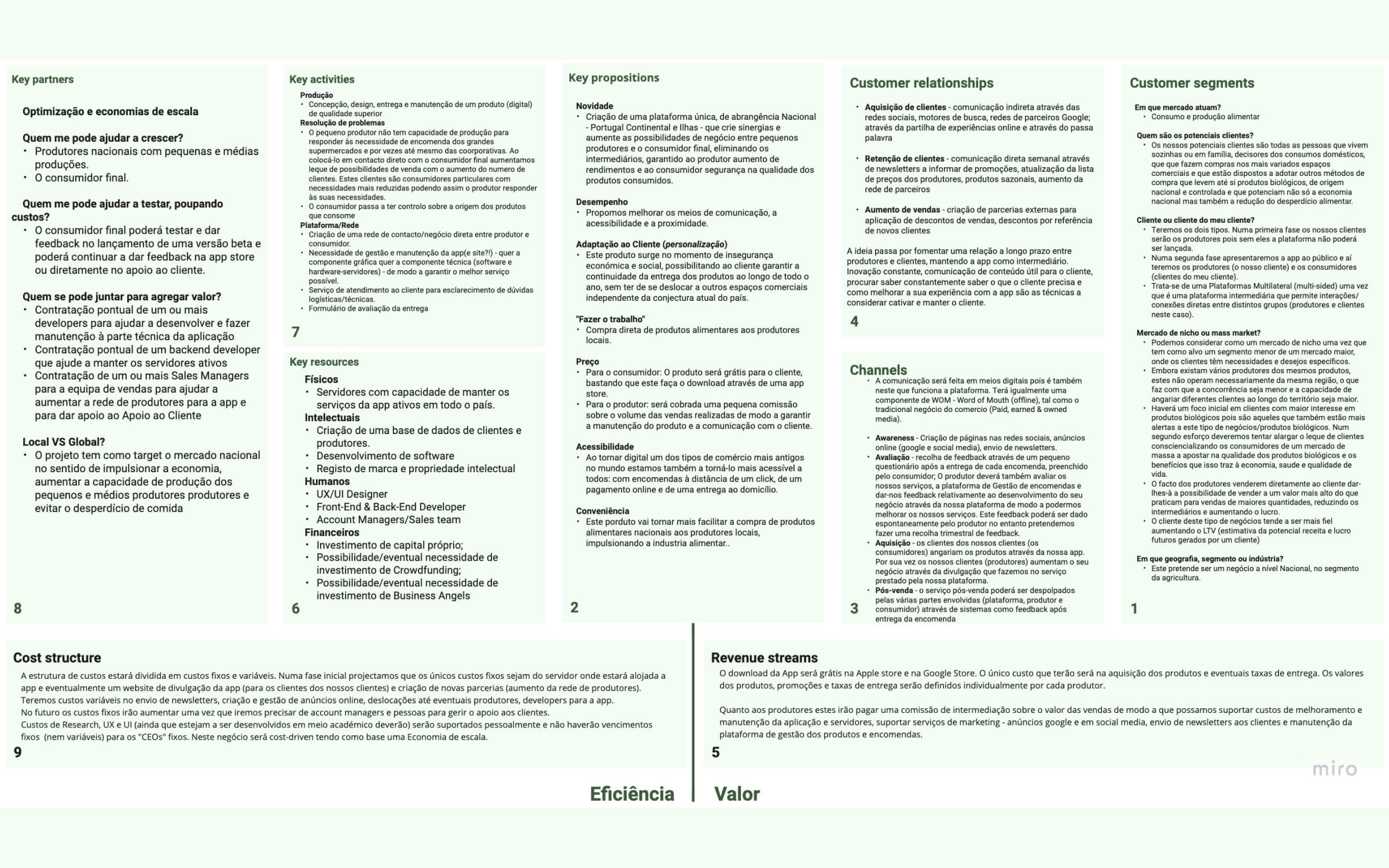
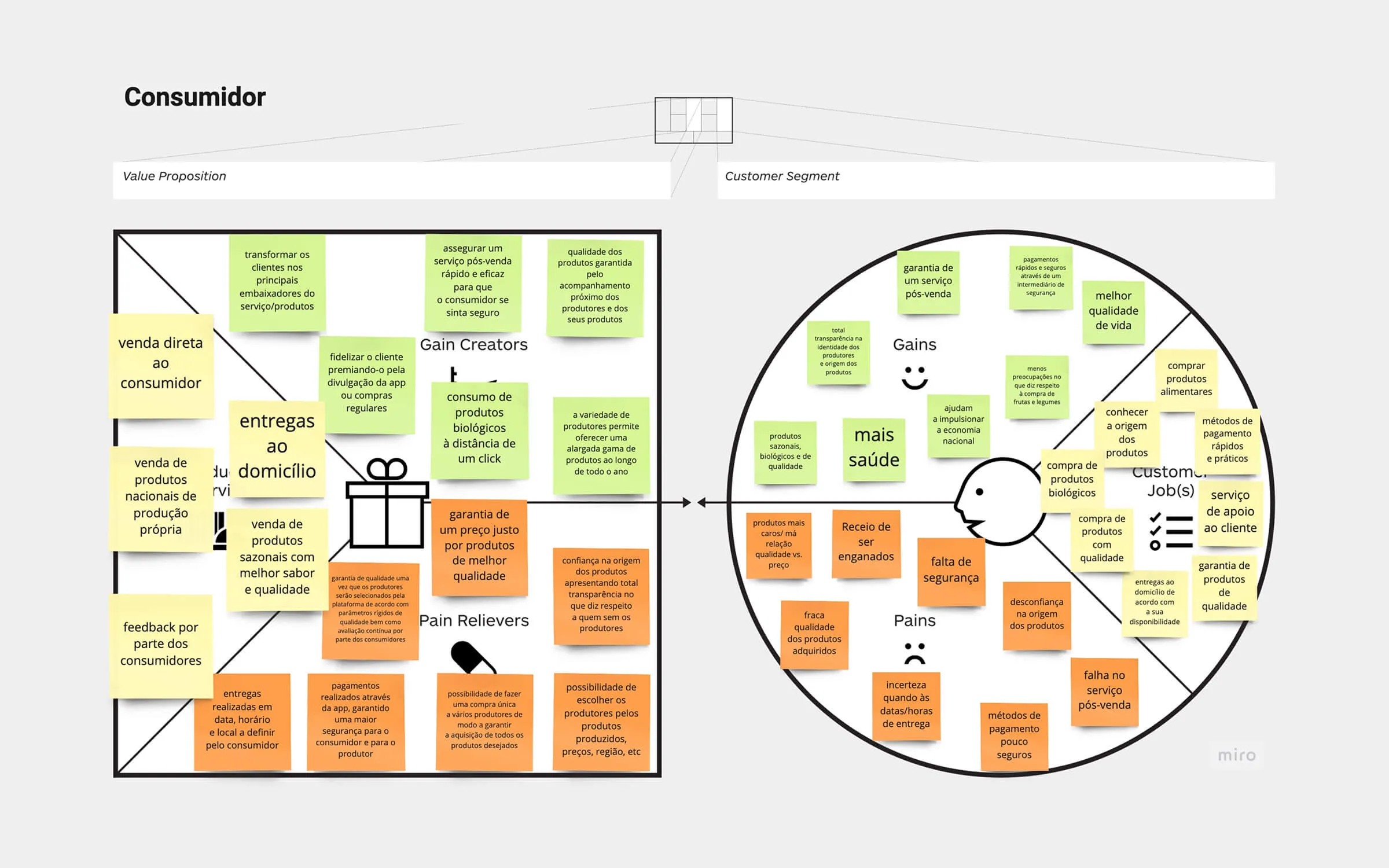
In Portugal, small farmers face structural limitations: manual operations, low visibility, dependence on intermediaries, and difficulty reaching urban consumers. At the same time, city residents increasingly seek fresh, local produce but struggle with high prices, limited transparency, and a lack of trustworthy digital alternatives.
The pandemic amplified both sides of the problem — farmers with surplus production and consumers relying on informal delivery channels like Instagram pages or phone orders. The opportunity was clear: create a digital bridge that modernises proximity commerce while preserving its authenticity.
Our challenge was to design a platform that supports fair margins for farmers, reinforces trust for consumers, and feels simple enough for both offline-first producers and digitally fluent buyers.
Our research combined secondary quantitative data (PORDATA, Nielsen, DECO, Marketeer, Statista) with direct field insights from 10 national farmers and over 60 consumer questionnaires. This allowed us to validate behaviours, expectations, and logistical constraints on both sides of the marketplace.
We benchmarked services such as UberEats, Glovo, Cuizeat, Fruta Feia, PROVE, DoCampo, Too Good To Go, Good Eggs, and Instacart. The gap was evident: no platform provided a fully transparent, farmer-first marketplace dedicated to local sourcing and proximity commerce.
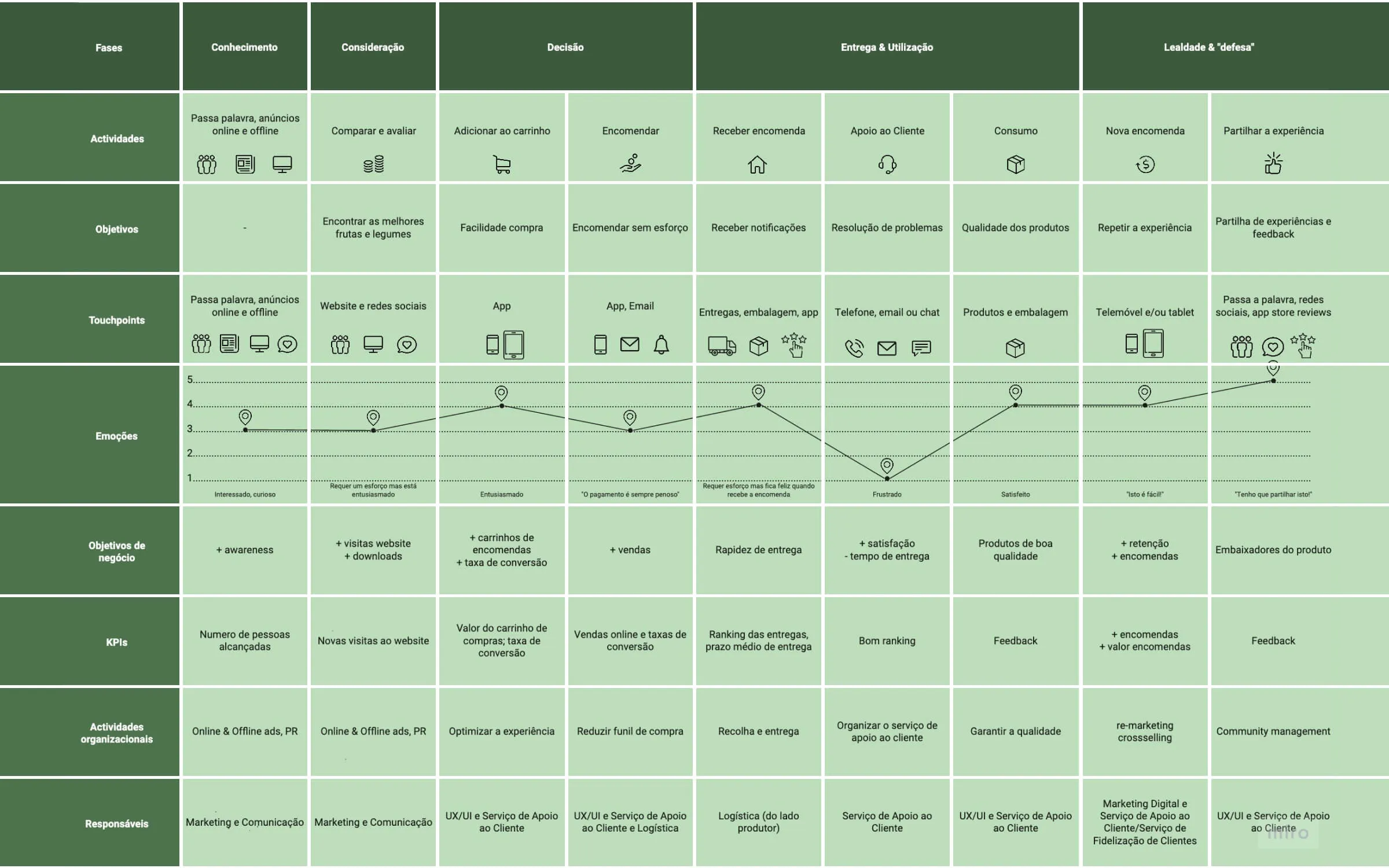
Using design thinking frameworks, we mapped the business model, customer journeys and digital architecture, shaping a product vision grounded in clarity, trust, and connection.
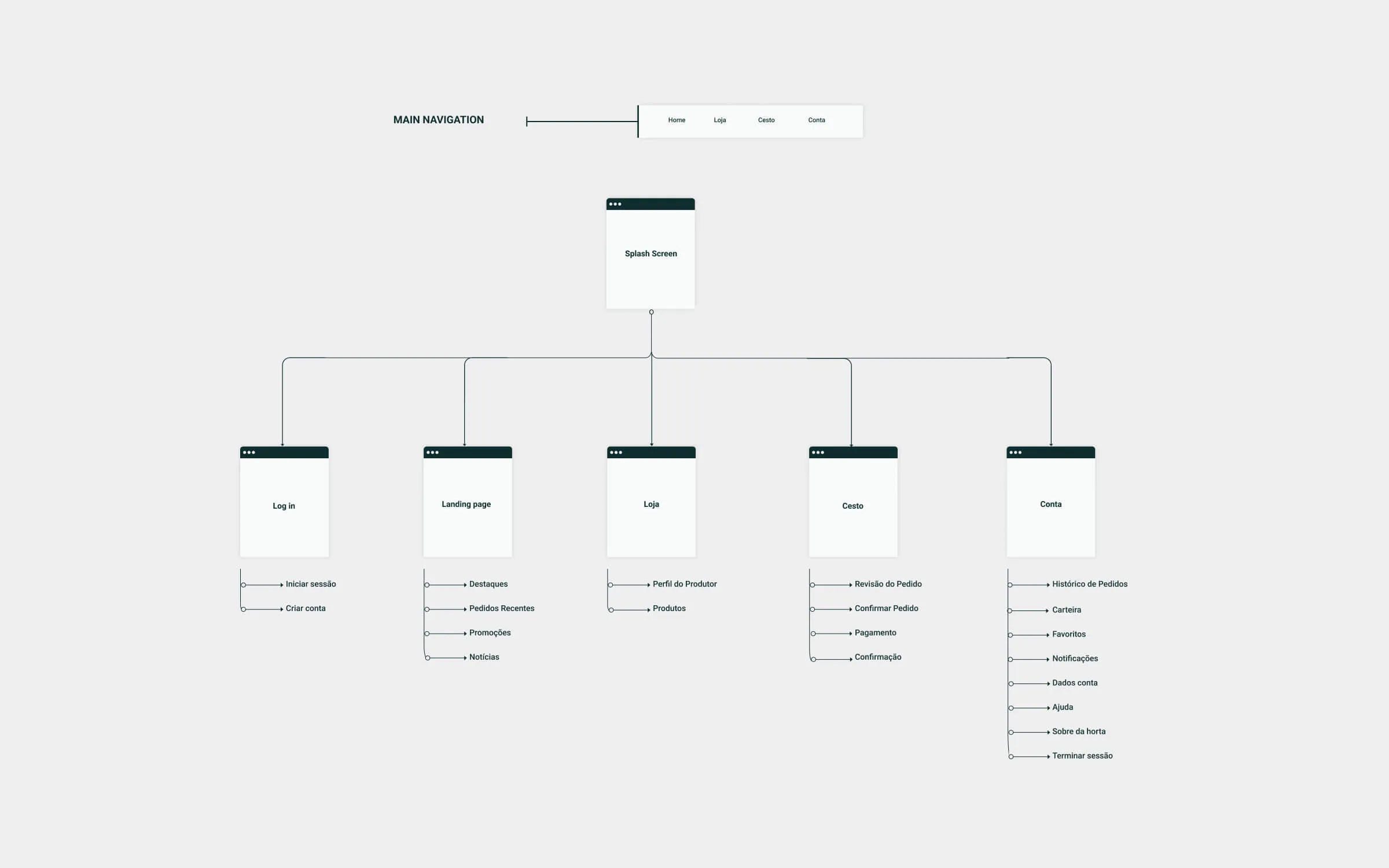
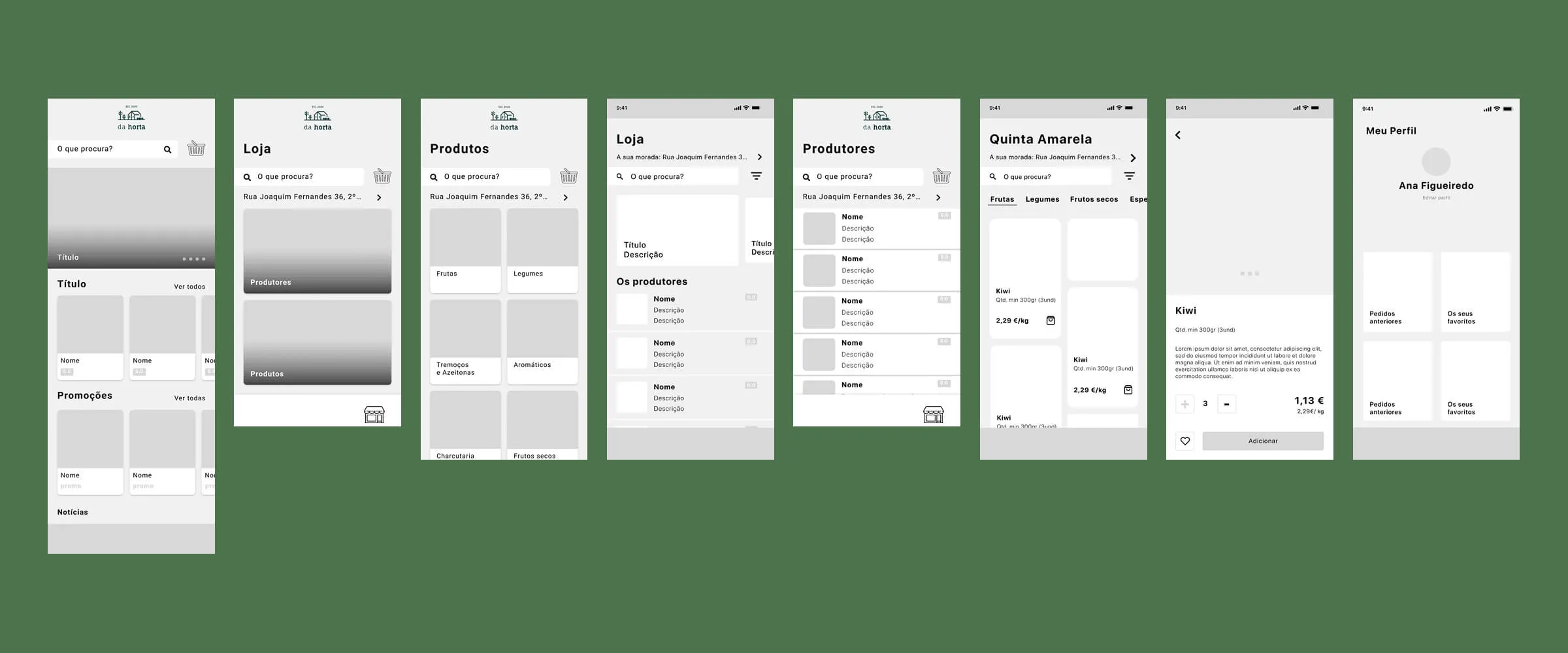
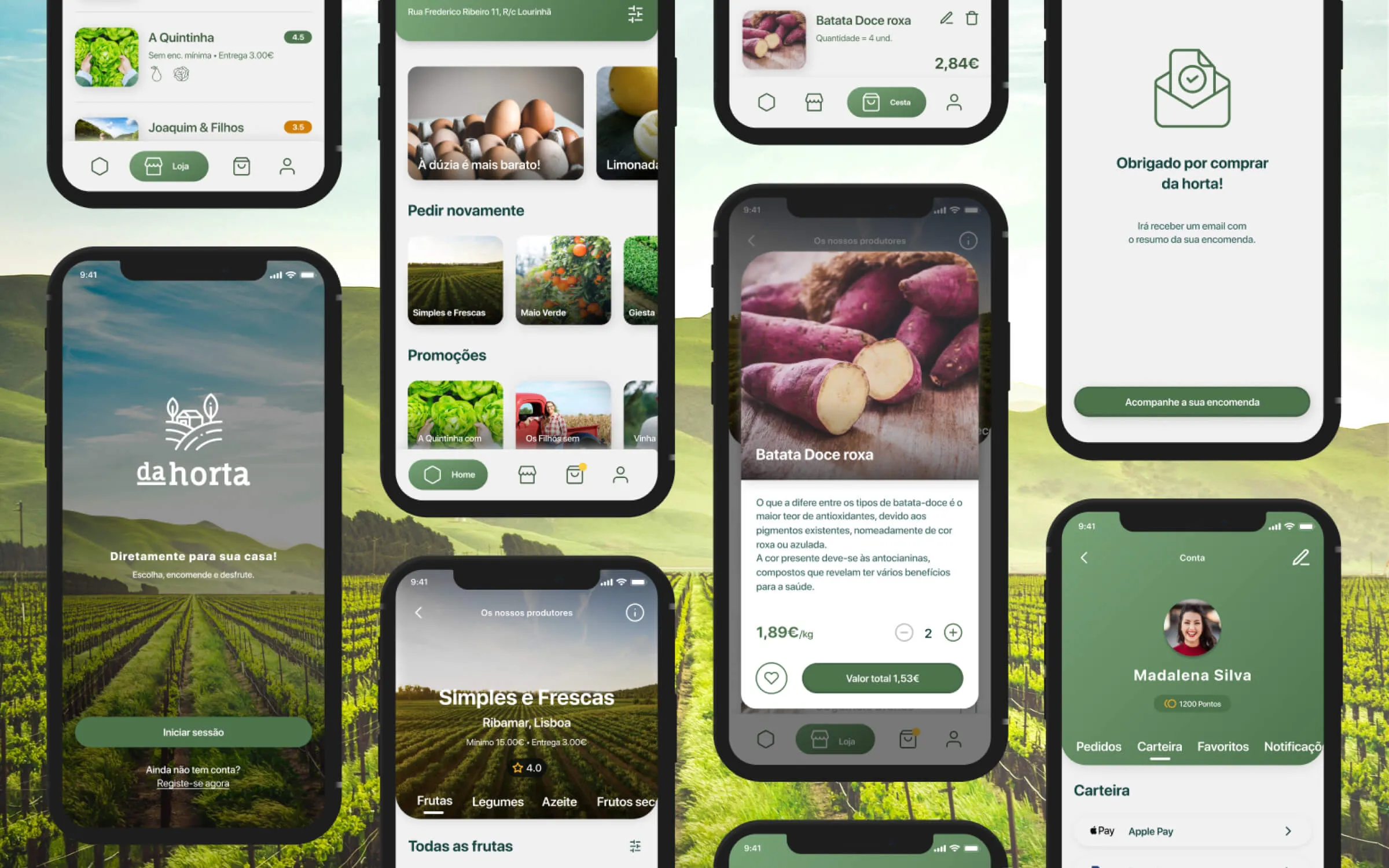
Da Horta’s solution merges simplicity with emotional design. The app allows users to browse by product or farmer, filter by proximity, and track orders easily. Farmers have their own profile pages where they can share history, photos, and client reviews — restoring the trust often lost in large-scale e-commerce.
The structure follows a clear hierarchy, including: Home feed with curated local products, individual farmer pages with full transparency cart and delivery system optimized for small producers. We also considered a future business portal for inventory and performance tracking
The UI system draws inspiration from natural tones — greens and ochres — evoking freshness and earthiness. A modular design system supports scalability across mobile and web, while maintaining a consistent visual language.
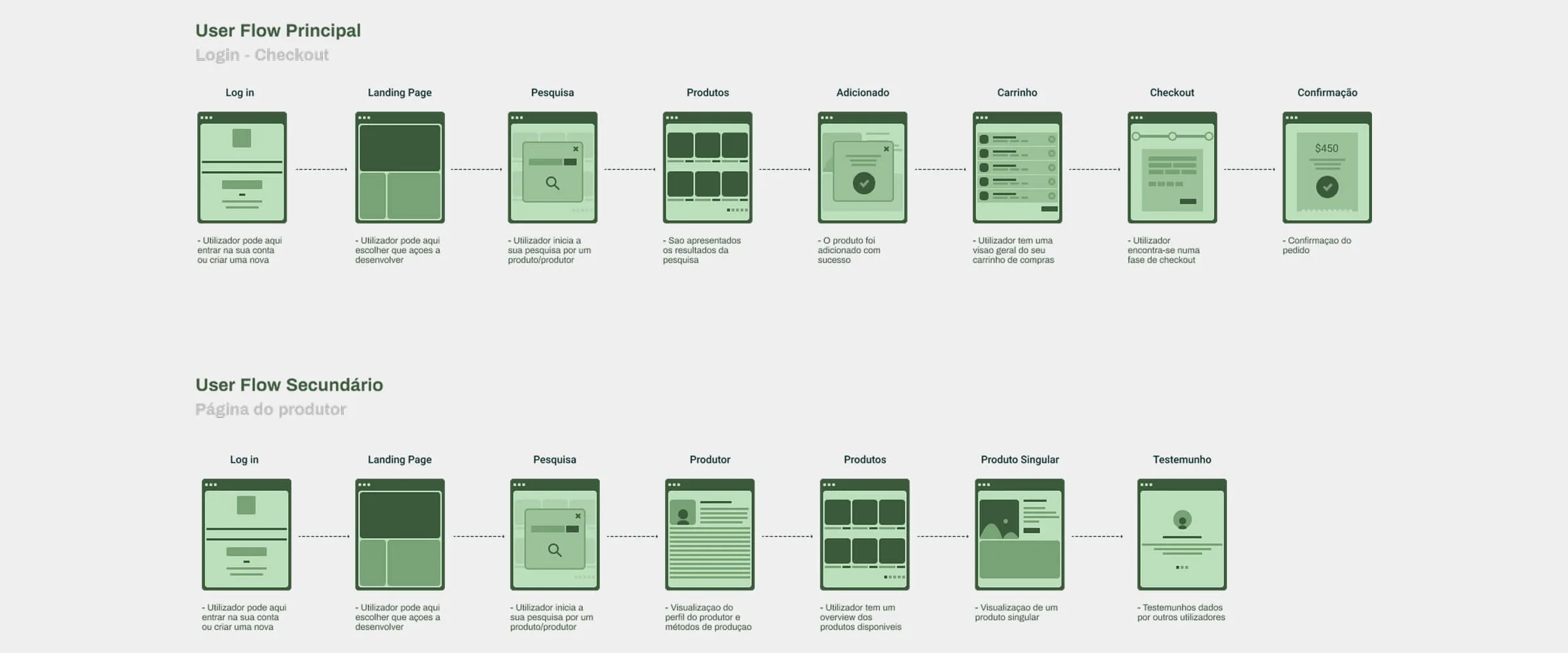


Usability testing with a diverse group of participants demonstrated that the Da Horta concept delivers a clear, intuitive and trustworthy experience for both frequent and occasional online shoppers. The prototype achieved a 100% task completion rate across all five assigned tasks and a 100% error-free rate, following the Nielsen Norman Group’s Success Rate methodology.
Participants praised the app’s simplicity, direct tone of voice, and clear organisation of information. They consistently highlighted that knowing the producer, understanding the product origin and browsing through clean, nature-inspired interfaces significantly increased their trust.
The tests also confirmed the value of Da Horta’s business model: users felt they were contributing to fairer practices, supporting local businesses, and helping strengthen the national economy — a relevant sentiment given the agricultural challenges amplified during the pandemic.
Users immediately understood the navigation, filters, ordering flow and producer pages, describing the experience as simple, clean and aligned with the natural feel of the brand.
Overall, the project demonstrated how emotional design, clarity and transparency can create a digital ecosystem that empowers small farmers and supports more sustainable, community-driven commerce.
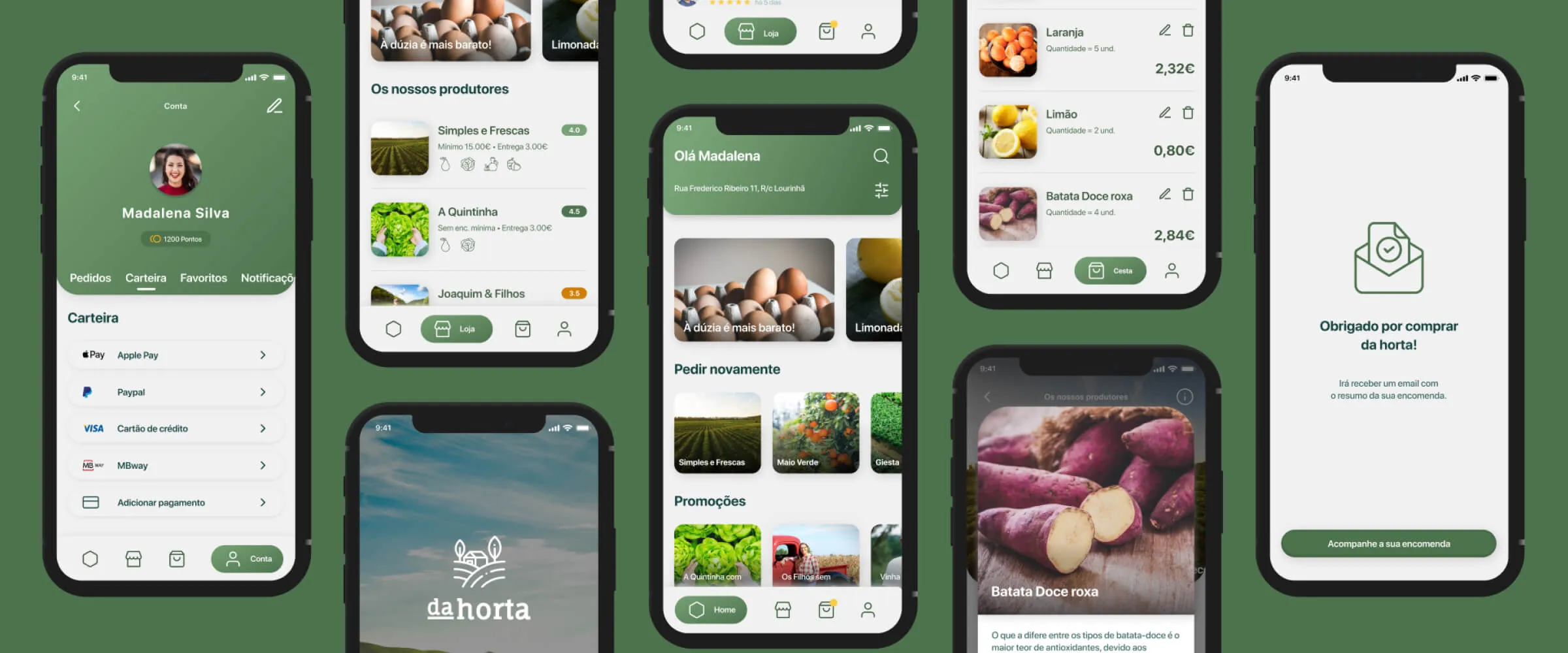
A friendly, clean digital presence for a local farm-to-table initiative, built around transparency, sustainability, and simple interactions.
A machine-learning collaboration platform redesigned for clarity, enabling engineers and domain experts to explore datasets, label inputs, and improve model accuracy.