Book a call

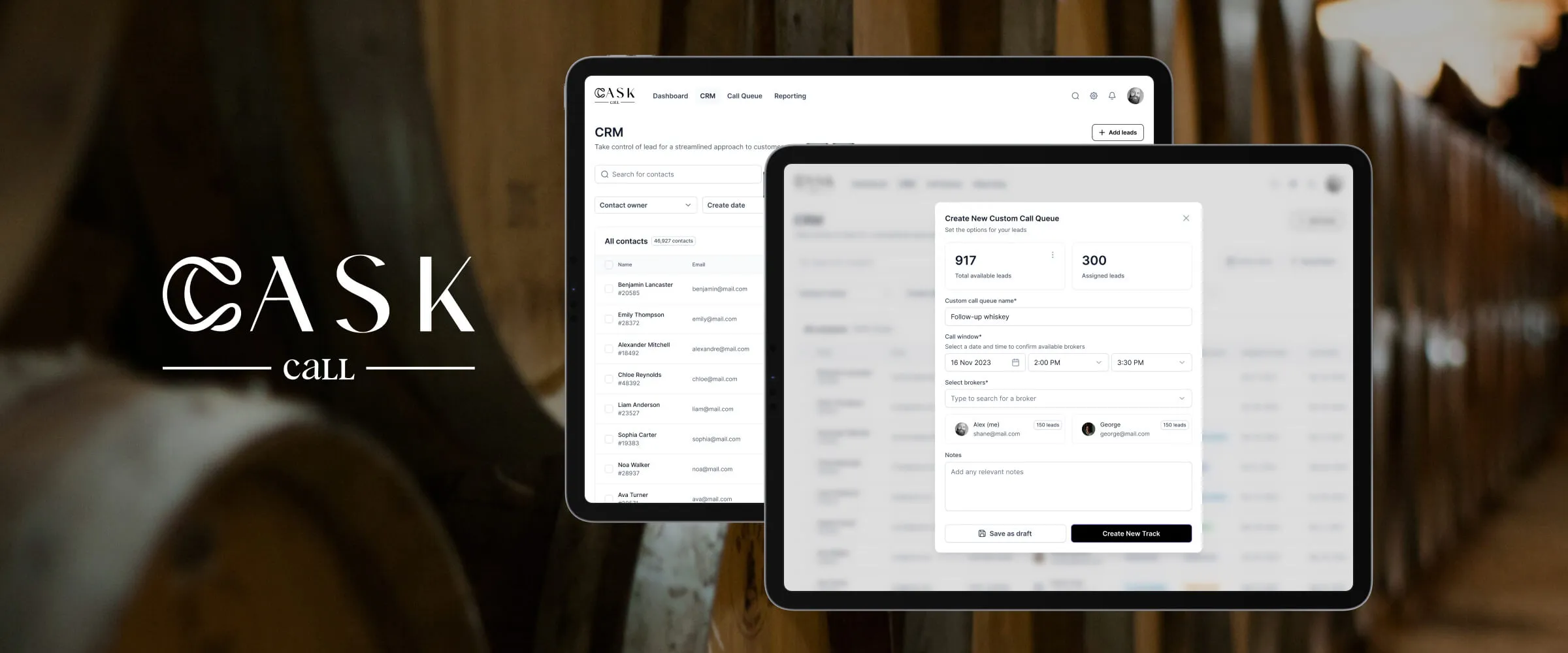
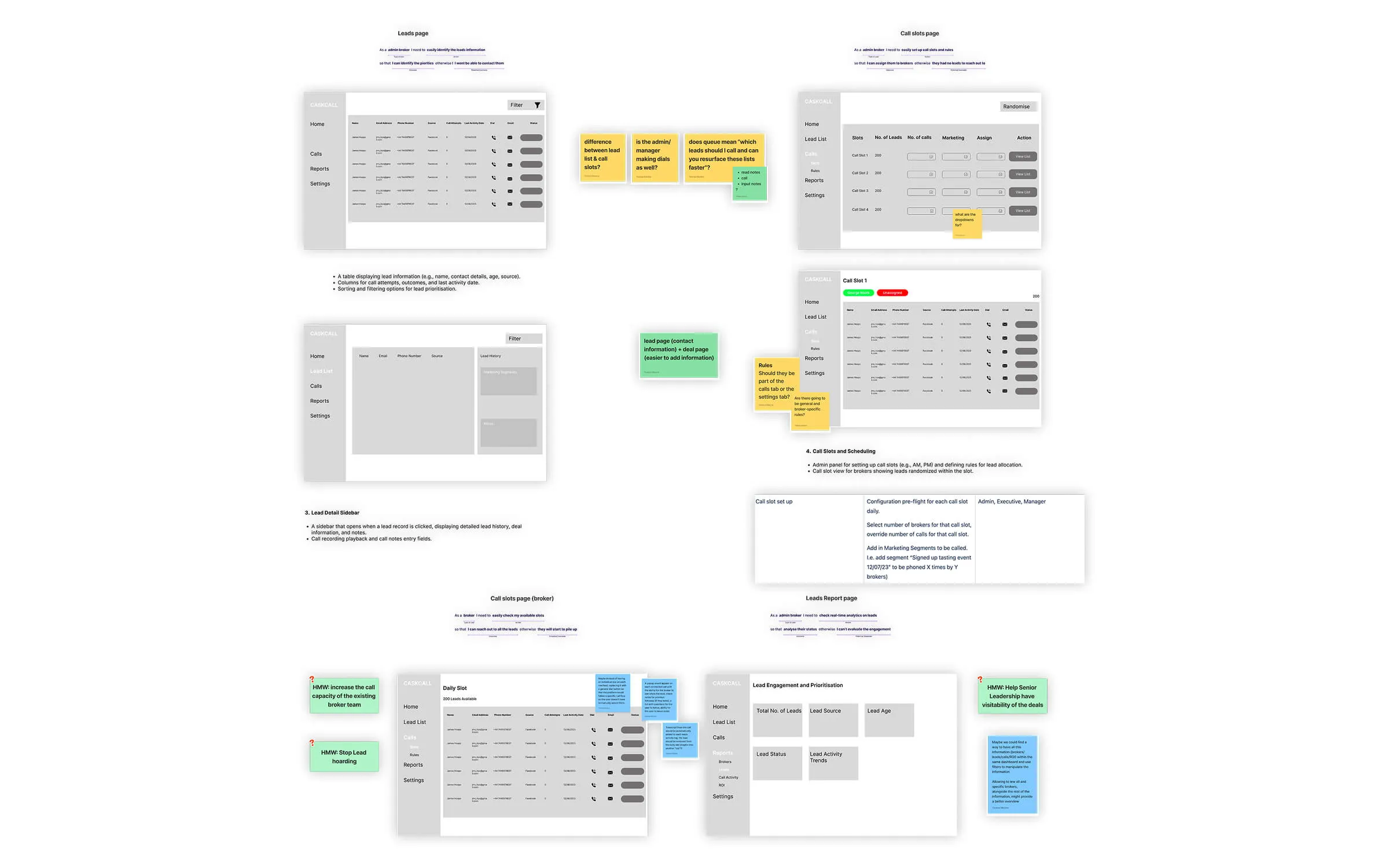
CaskCall approached us with a partially formed concept, several early competitor screens, and simple wireframes that expressed the initial direction of their internal call-queue platform. The goal was to transform scattered ideas into a structured, intuitive system that supported brokers, sales managers, and admin teams throughout the full calling lifecycle.
Our work began with analysing all provided materials, organising ideas into themes, identifying “How Might We” challenges, and defining personas for each user type. These early discovery steps created alignment and established a shared language that guided the rest of the project.
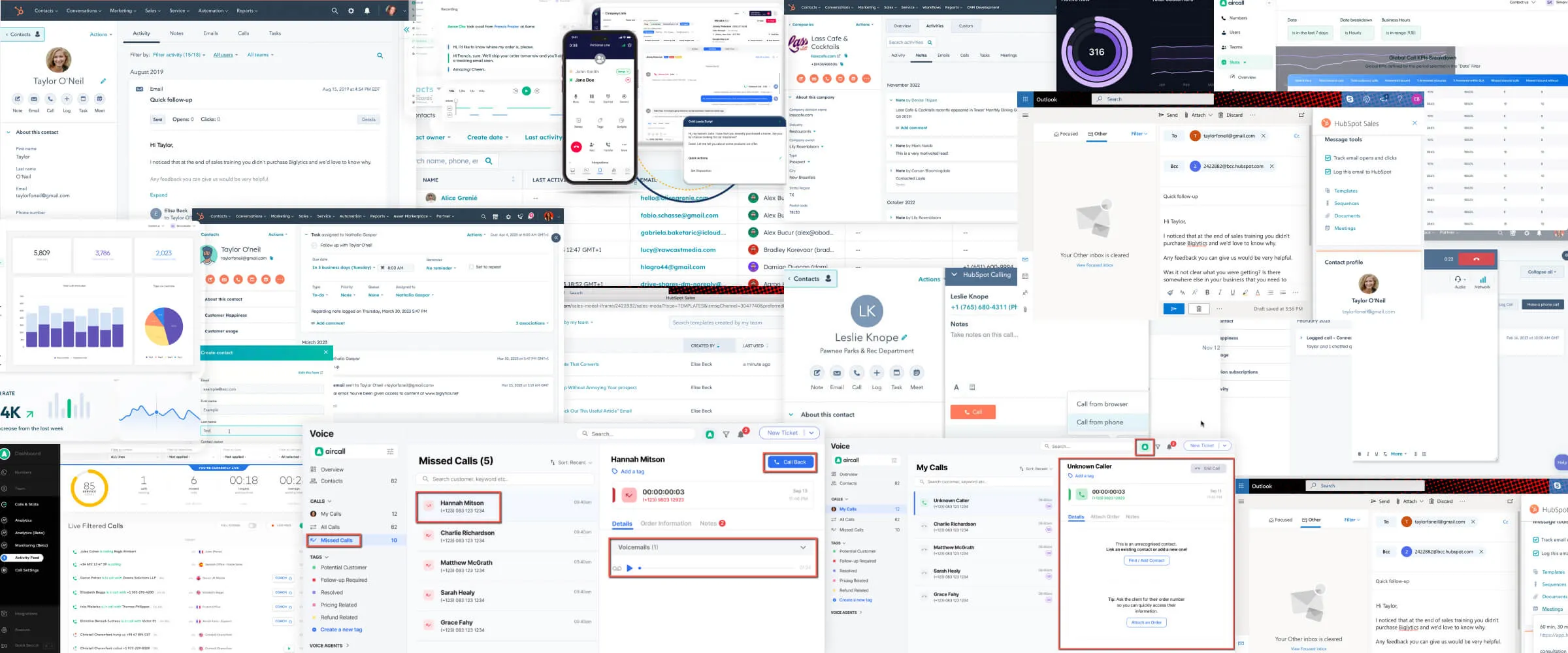
The project began with a rich but chaotic collection of materials: screenshots, call-flow notes, competitor references, and fragmented ideas spread across multiple sources. Nothing was centralised, and no clear product structure existed. This made it difficult for the team to articulate how brokers should work, how managers should intervene, and what “efficiency” or “performance visibility” should actually look like inside the platform.
The biggest challenge was transforming scattered inputs into a coherent understanding of the product’s core problems—especially around efficiency, broker performance tracking, lead prioritisation, and real-time queue visibility.
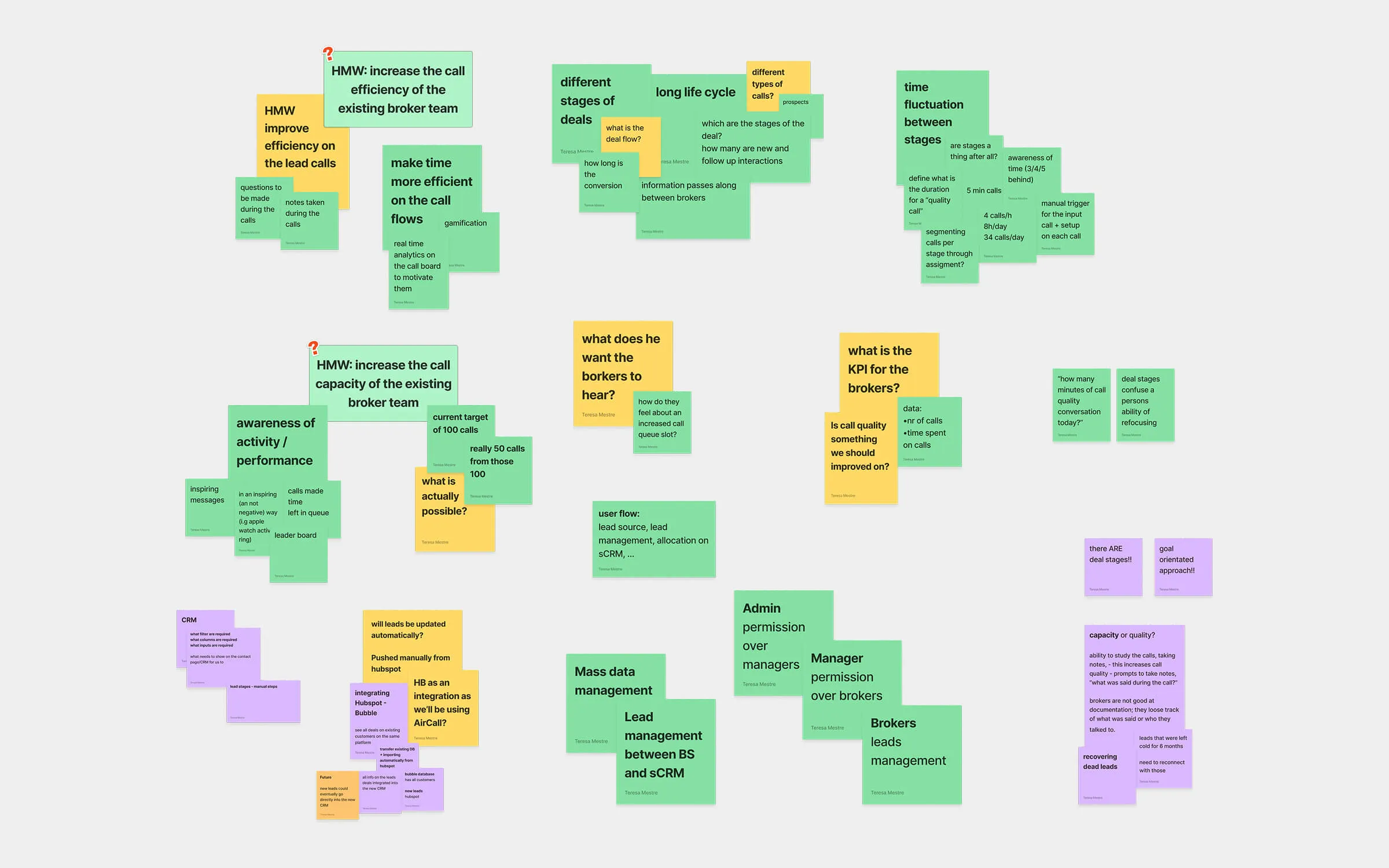
We began by clustering insights, validating assumptions, and mapping recurring themes across all the provided materials. This allowed us to define the platform’s foundational questions and articulate what the system truly needed to solve.
We then created detailed personas for brokers and broker-managers, grounding our design decisions in real workflows, needs, and frustrations. Through these personas and early conceptual flows, we clarified the platform’s purpose: helping brokers operate efficiently while giving managers powerful oversight and operational control.
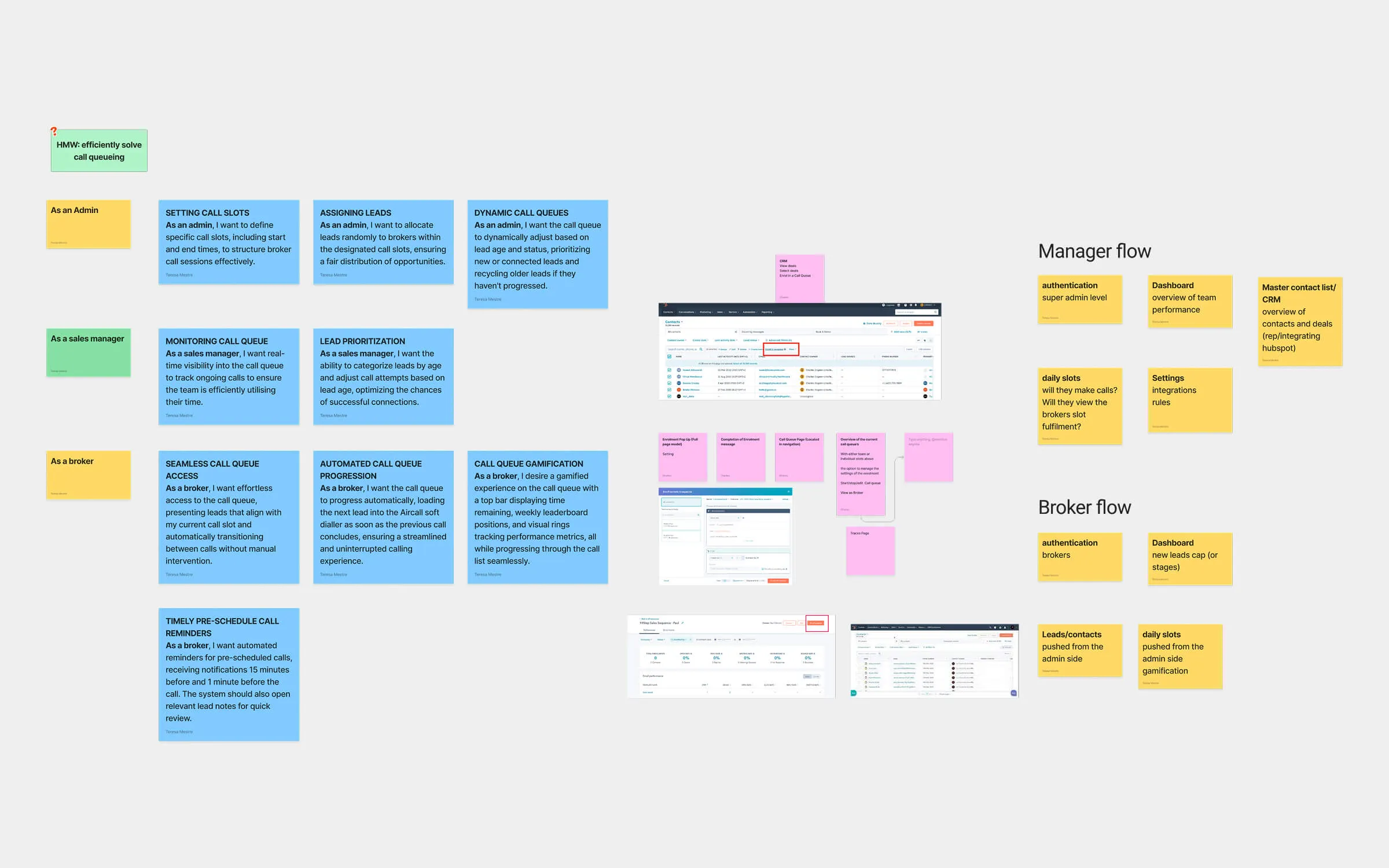
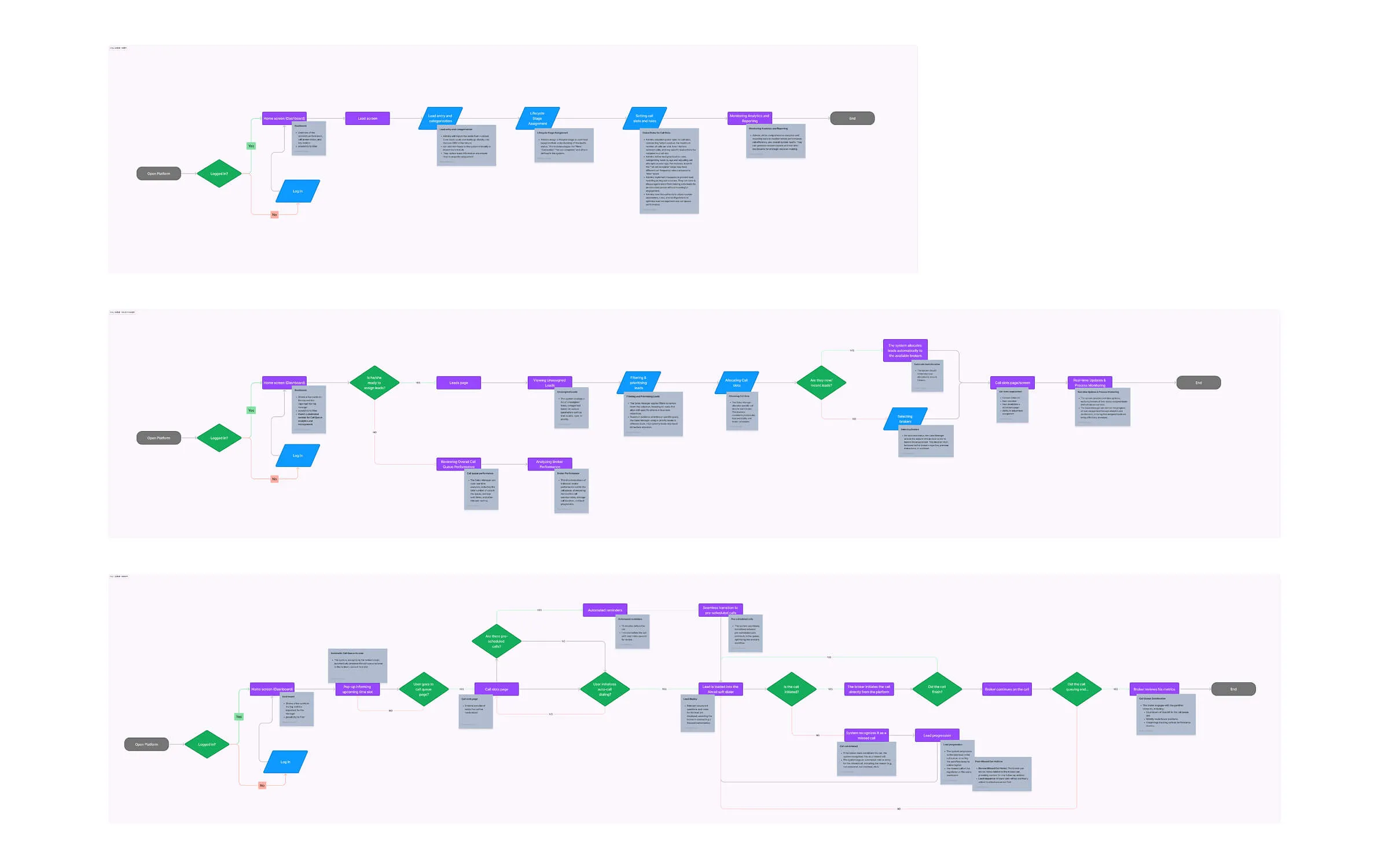
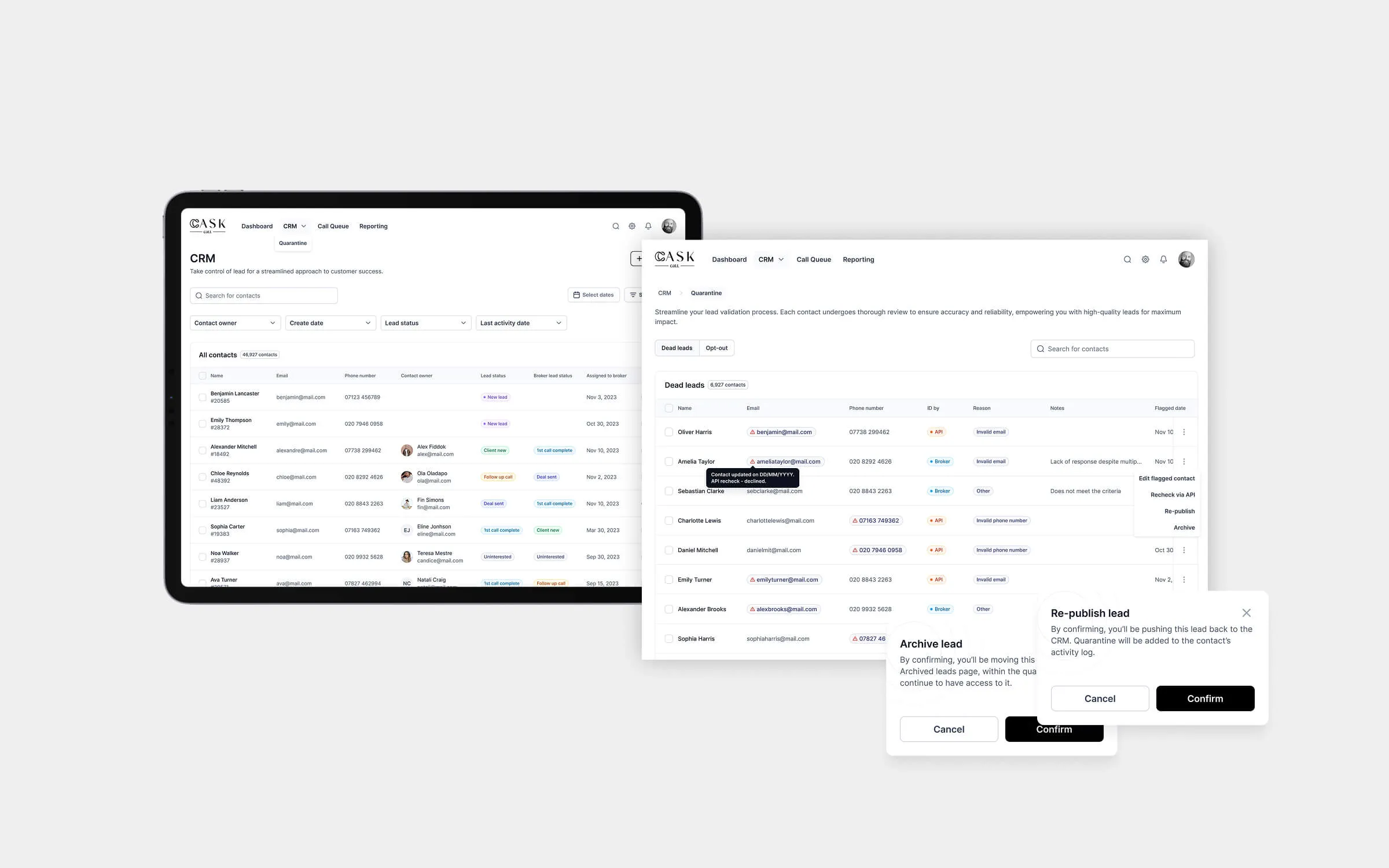
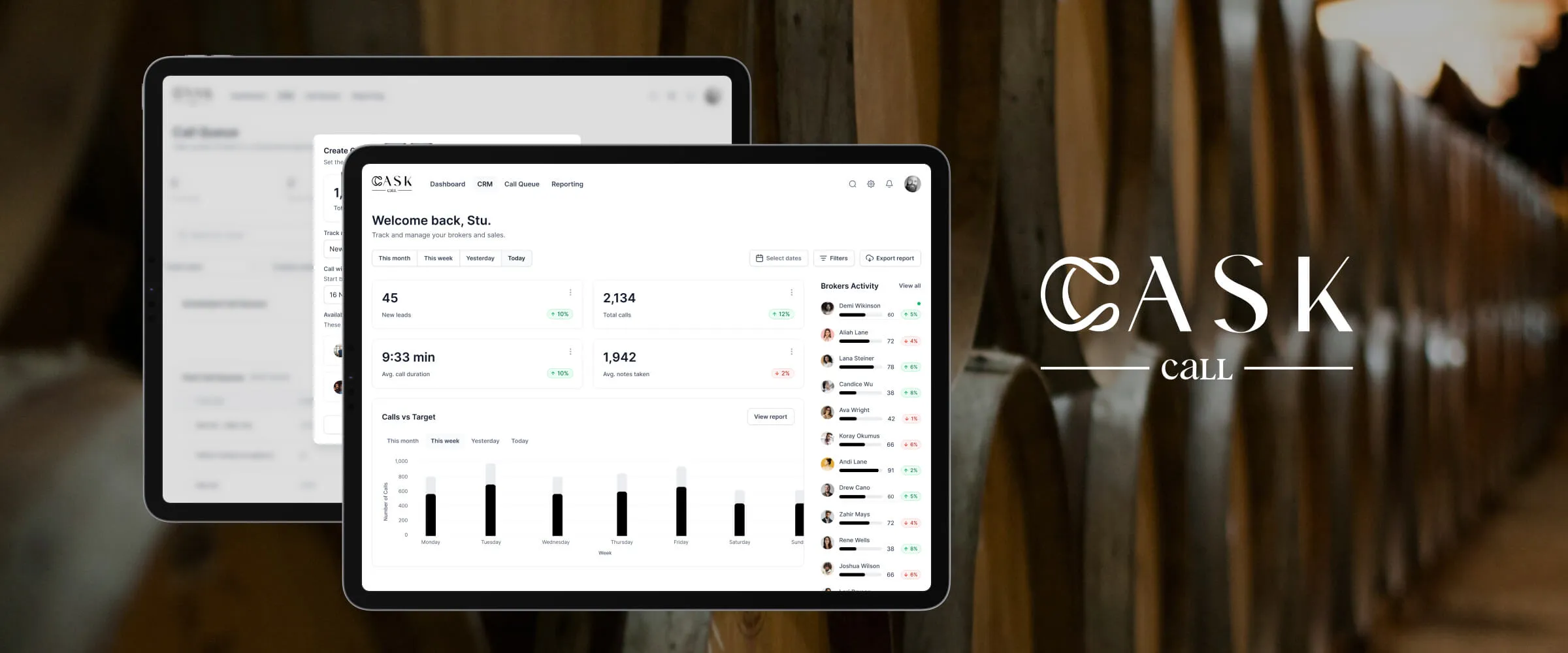
Once the strategic foundation was set, we defined the product structure around three core pillars: authentication flows, the main dashboard, and an advanced CRM with a custom call queue and quarantine management. These modules reflected both the initial vision and the operational realities uncovered during discovery.
We then moved into high-fidelity wireframing using a dedicated UI kit, producing complete flows for the call queue, dynamic call queue, broker view, and manager view. Throughout the process, we continuously refined the architecture based on insights from each client session.
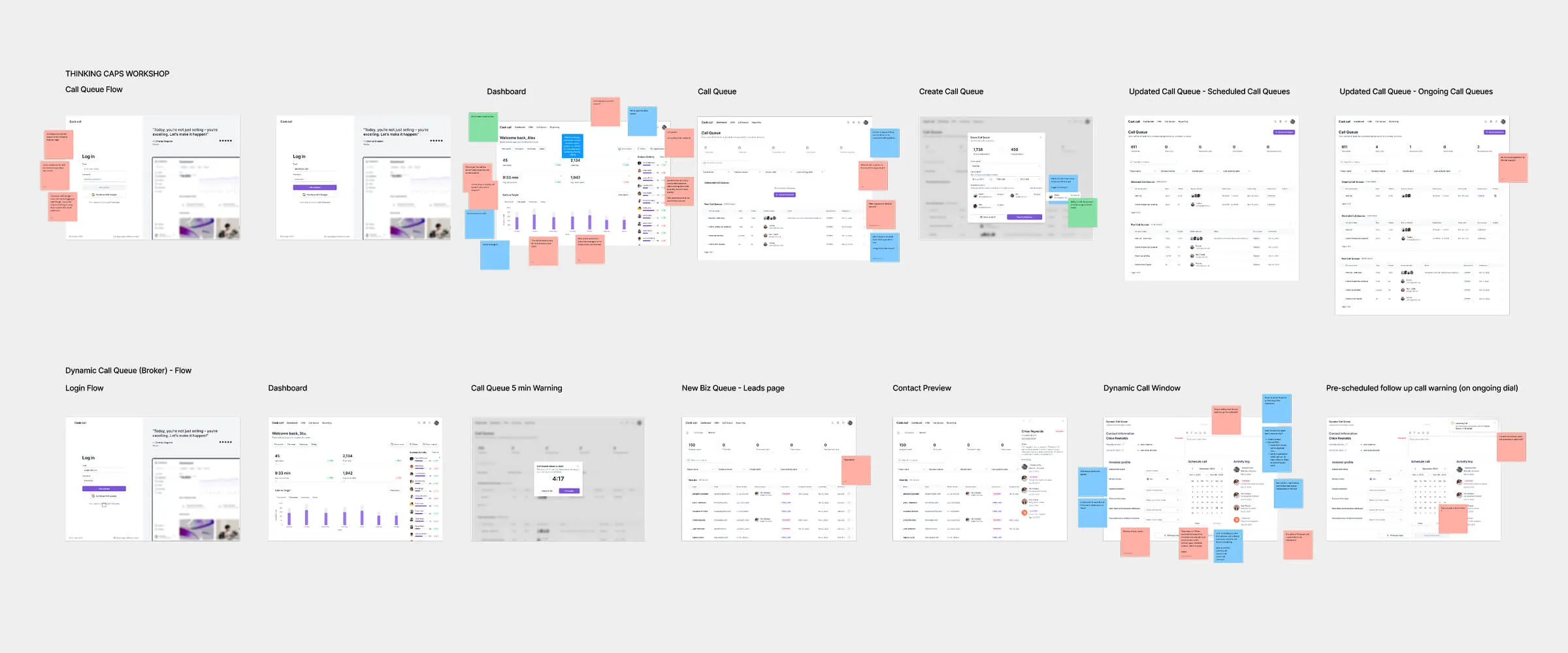
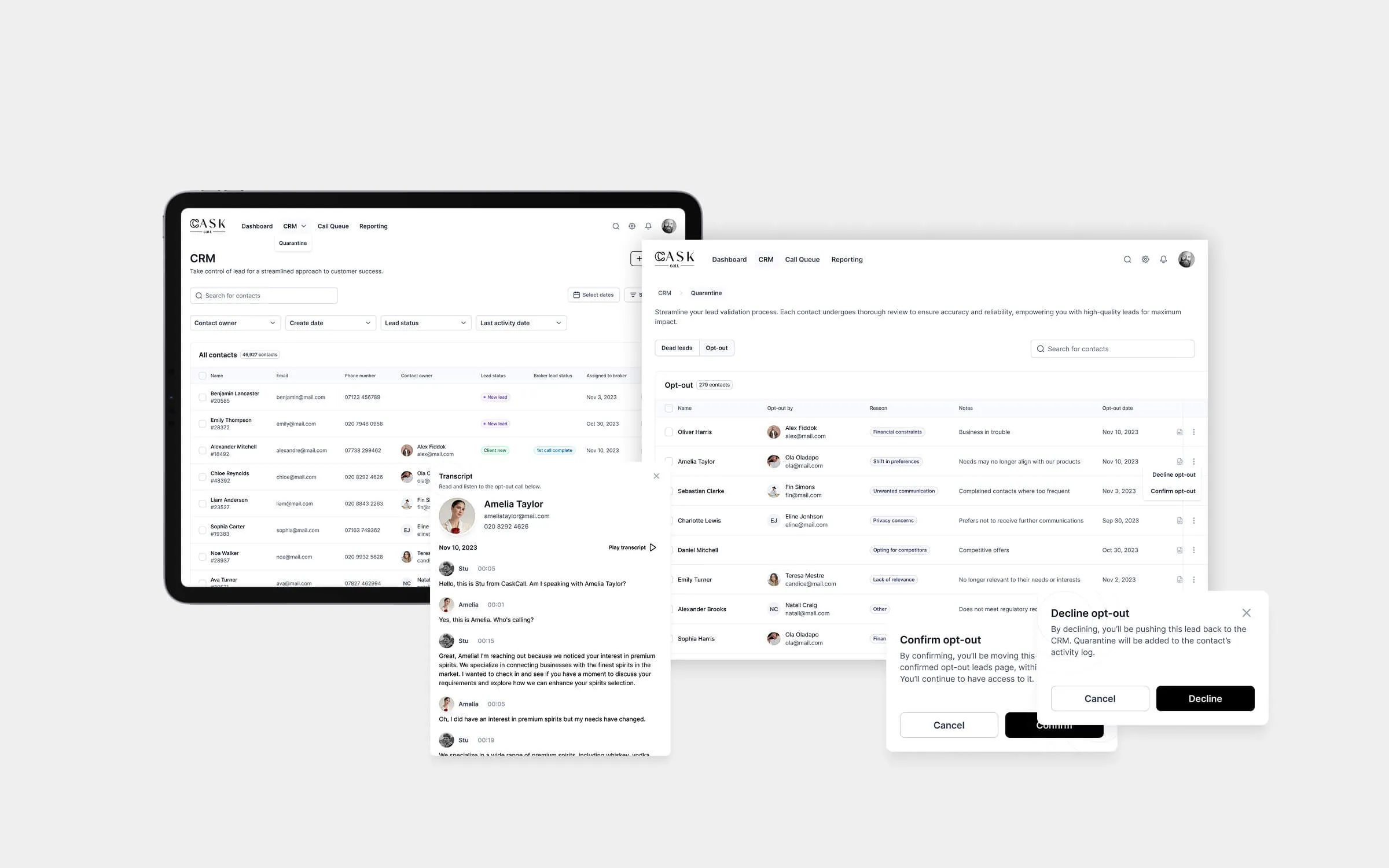
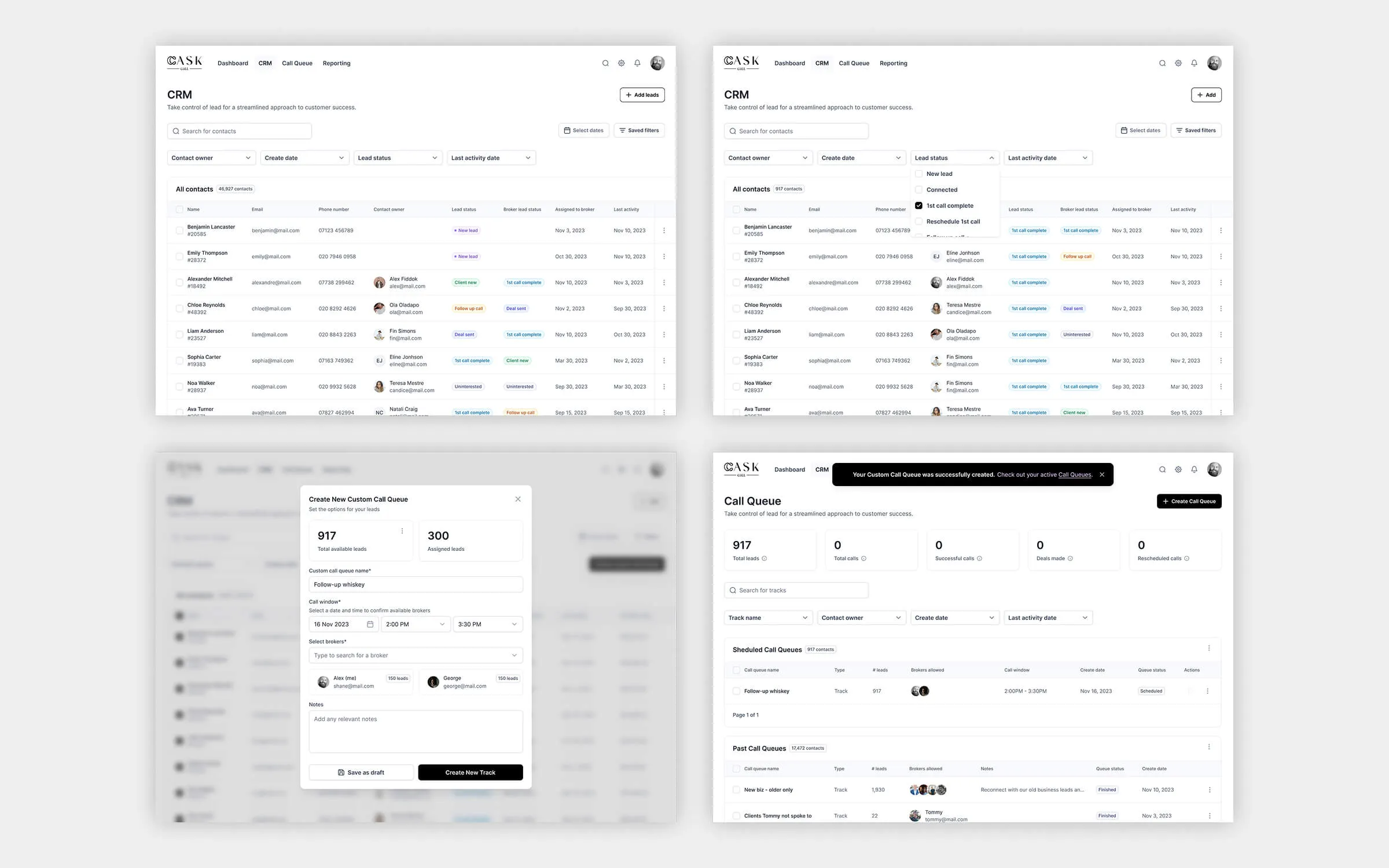
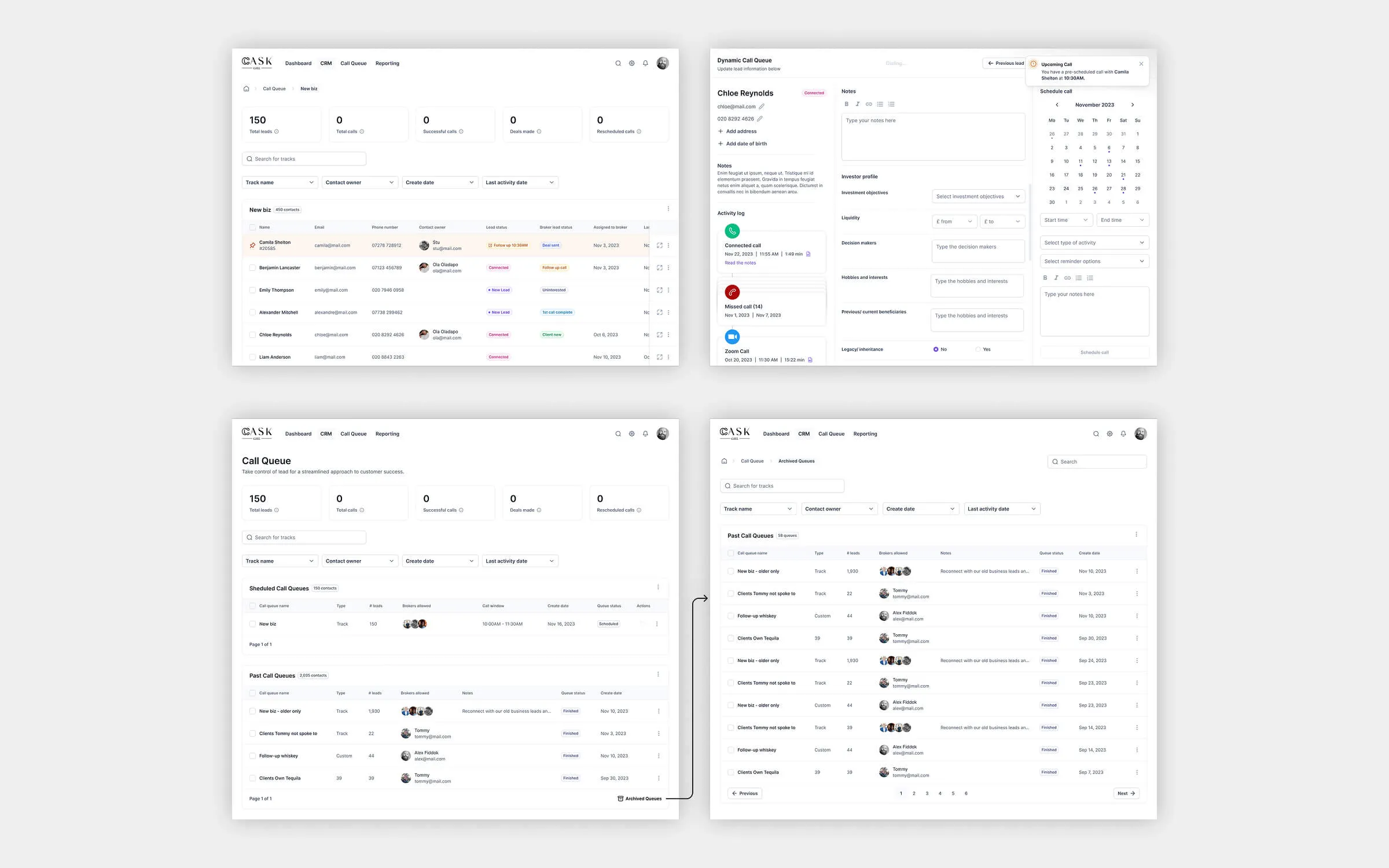
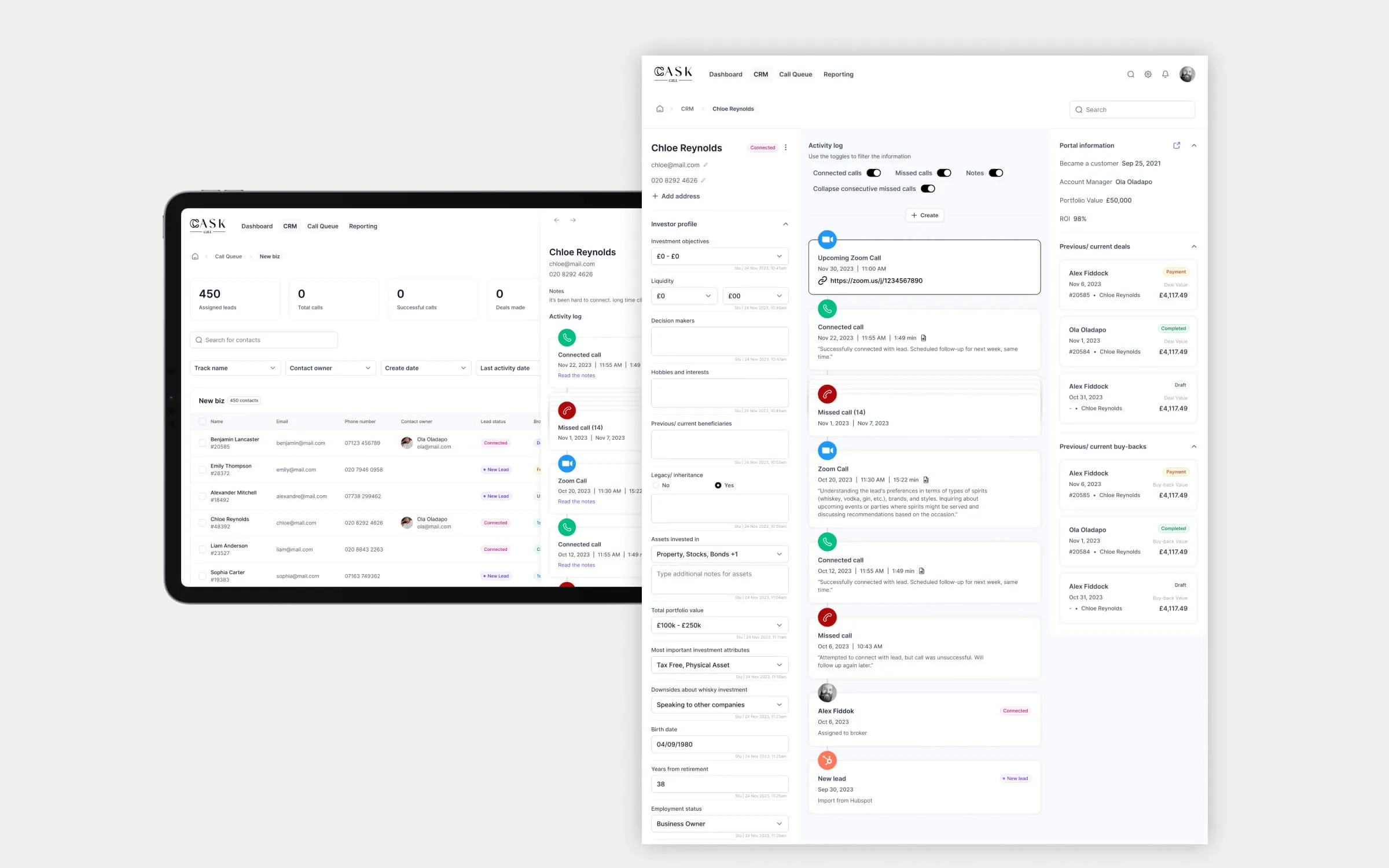
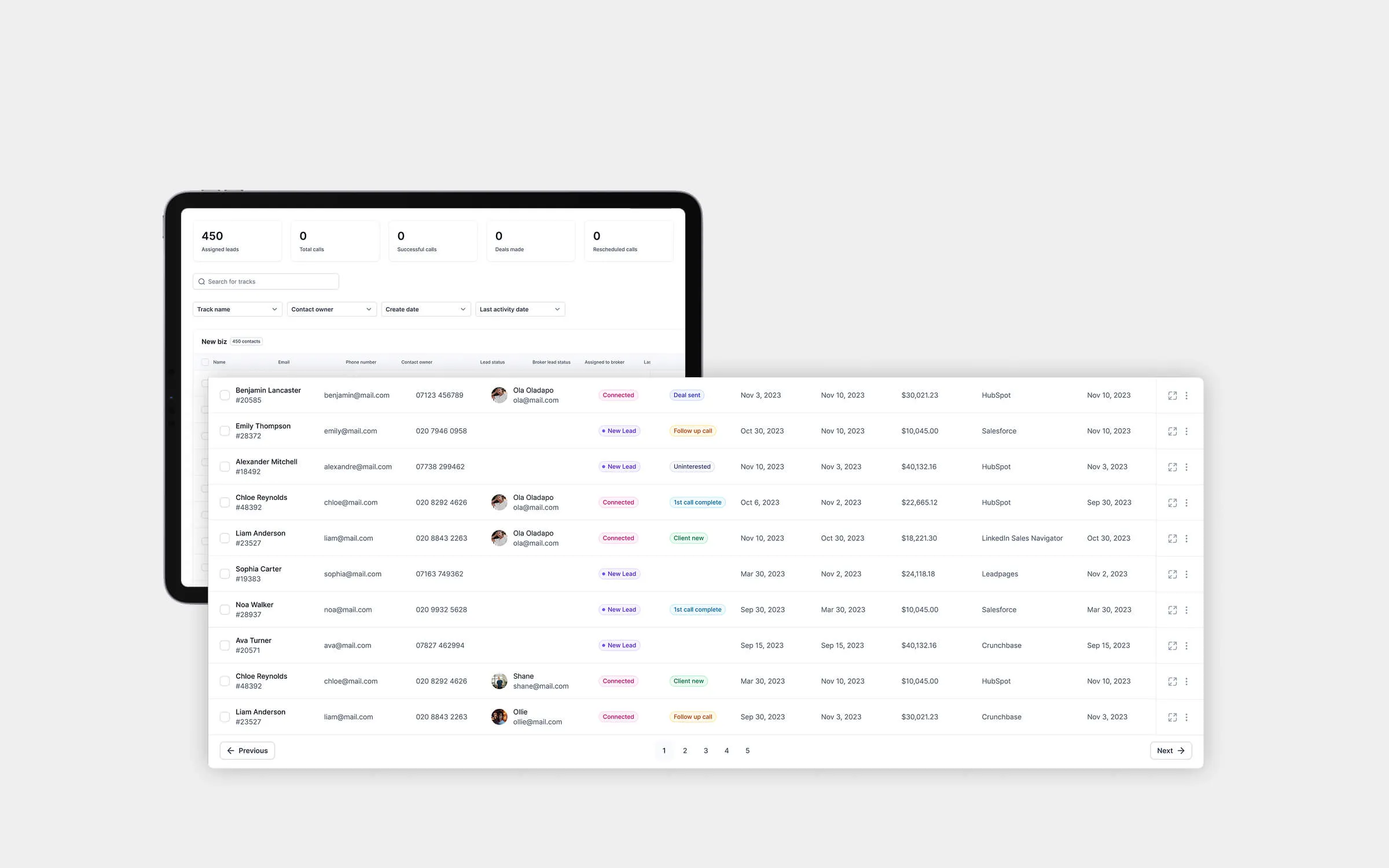
Once the core hi-fi flows were complete, we facilitated a Thinking Caps workshop with the CaskCall team to validate logic, confirm behavioural expectations, and ensure the platform aligned with real operational needs. The workshop confirmed that our structural decisions, navigation, and call-queue mechanics accurately reflected how brokers and managers actually work. This gave the team immediate clarity and alignment across departments.
The collaborative review also accelerated decision-making, removing ambiguity around lead handling, visibility rules, and queue management. As a result, the platform gained a stronger operational backbone, with design choices backed by team-wide consensus.
Each workshop session surfaced new nuances—lead prioritisation rules, manager overrides, call recycling logic, pre-scheduled follow-up reminders, quarantine scenarios, and more. These insights directly informed the refinement of detailed workflows, ensuring each screen, state, and interaction reflected real-world business processes rather than theoretical assumptions.
This iterative loop between design and operational insight became a key success factor, grounding the platform in accuracy, speed, and scalability
A suite of analytical tools redesigned into one structured experience — simplifying market tests, sample-size modelling, and results validation.

A complex US-mortgage underwriting tool reorganised into clear flows, helping consultants review, validate, and approve applications with confidence.