Book a call

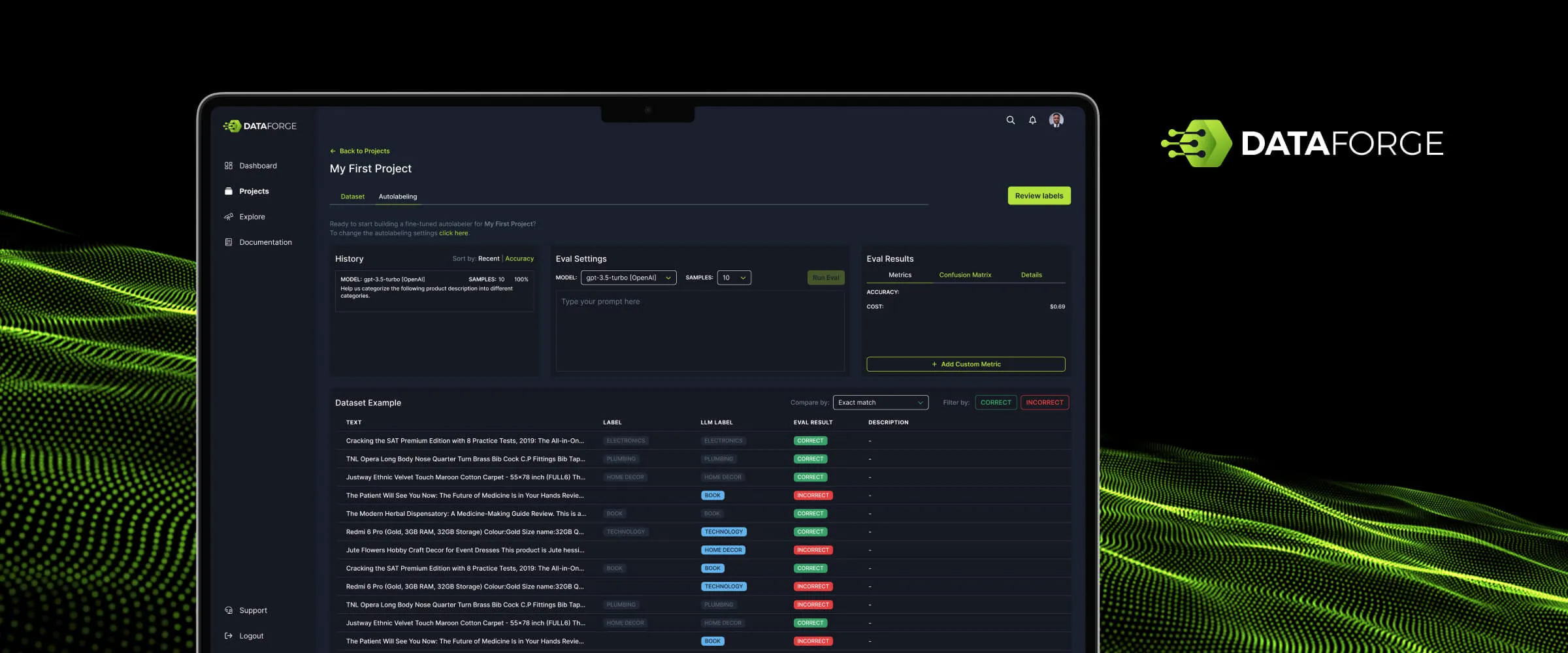
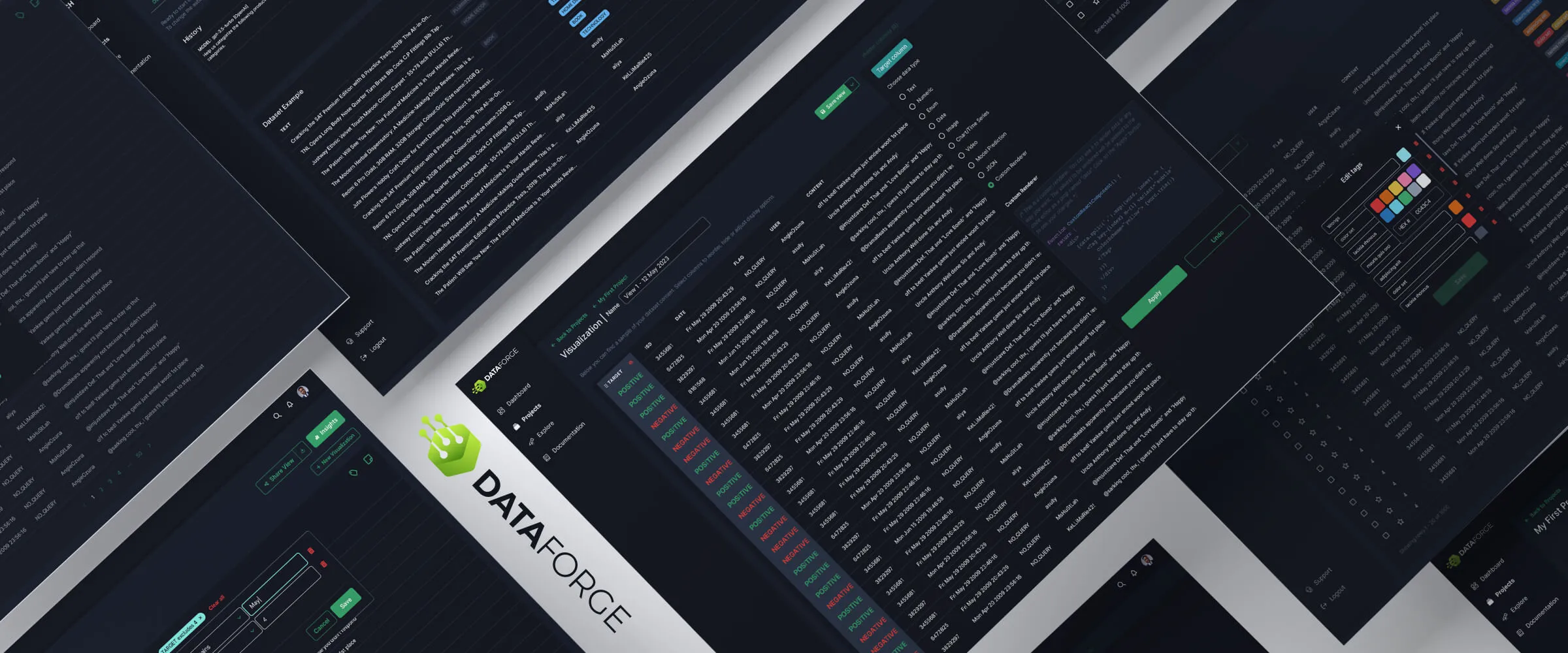
Data Forge is a machine learning collaboration platform designed for engineers and domain experts working together to improve model accuracy. When the client approached us, they had only an internal demo — a product with strong technical foundations but no real UX structure, no flows, and no visual consistency.
The goal of the first 3-week sprint was to transform this demo into a functional, intuitive platform: clear data visualisation, structured model-creation flows, and a logical collaboration framework that scaled with new features.
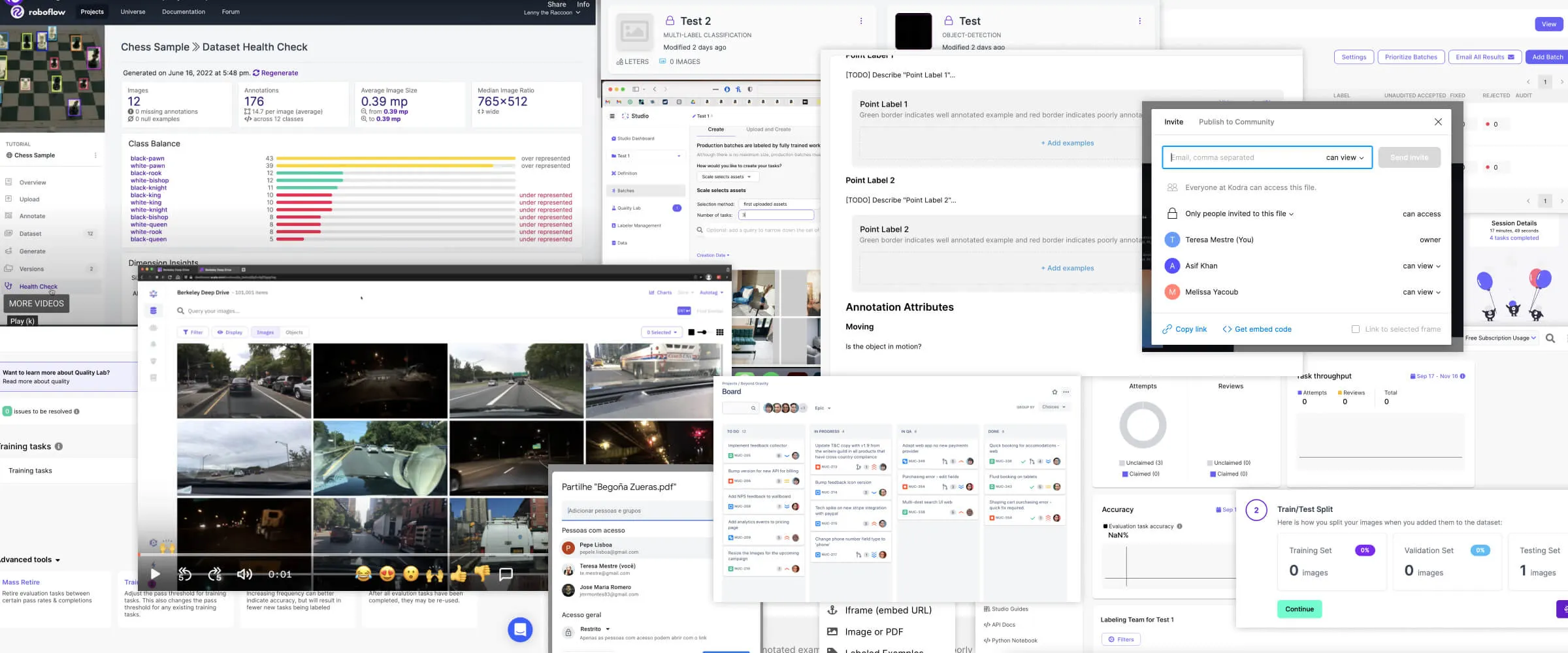
The biggest obstacle was the complexity of the information ecosystem. The product needed to support multiple data types, model configurations, datasets, collaborators, and workflows — all while remaining understandable to both engineers and non-technical experts. Nothing was standardised: visual formatting, decimal systems, data views, permissions, and flows were all inconsistent or undefined.
We began with discovery sessions and technical clarifications to map how data entered the system, how models were built, and how collaborators interacted with the platform. Using Miro, we documented assumptions, user actions, and the relationships between datasets, visualisations, and model outputs. Once aligned, we created the first foundational flows: creating a project, uploading datasets, configuring outputs, personalising data views, and defining collaboration permissions.
The initial sprint delivered a structured UX foundation that the engineering team could use to scale the product. We defined consistent data visualisation standards (table vs card view, column behaviour, decimals, colour logic), built the main user flows, and created a high-fidelity interactive prototype demonstrating onboarding, project creation, dataset upload, visualisation customisation, and collaboration hierarchy.
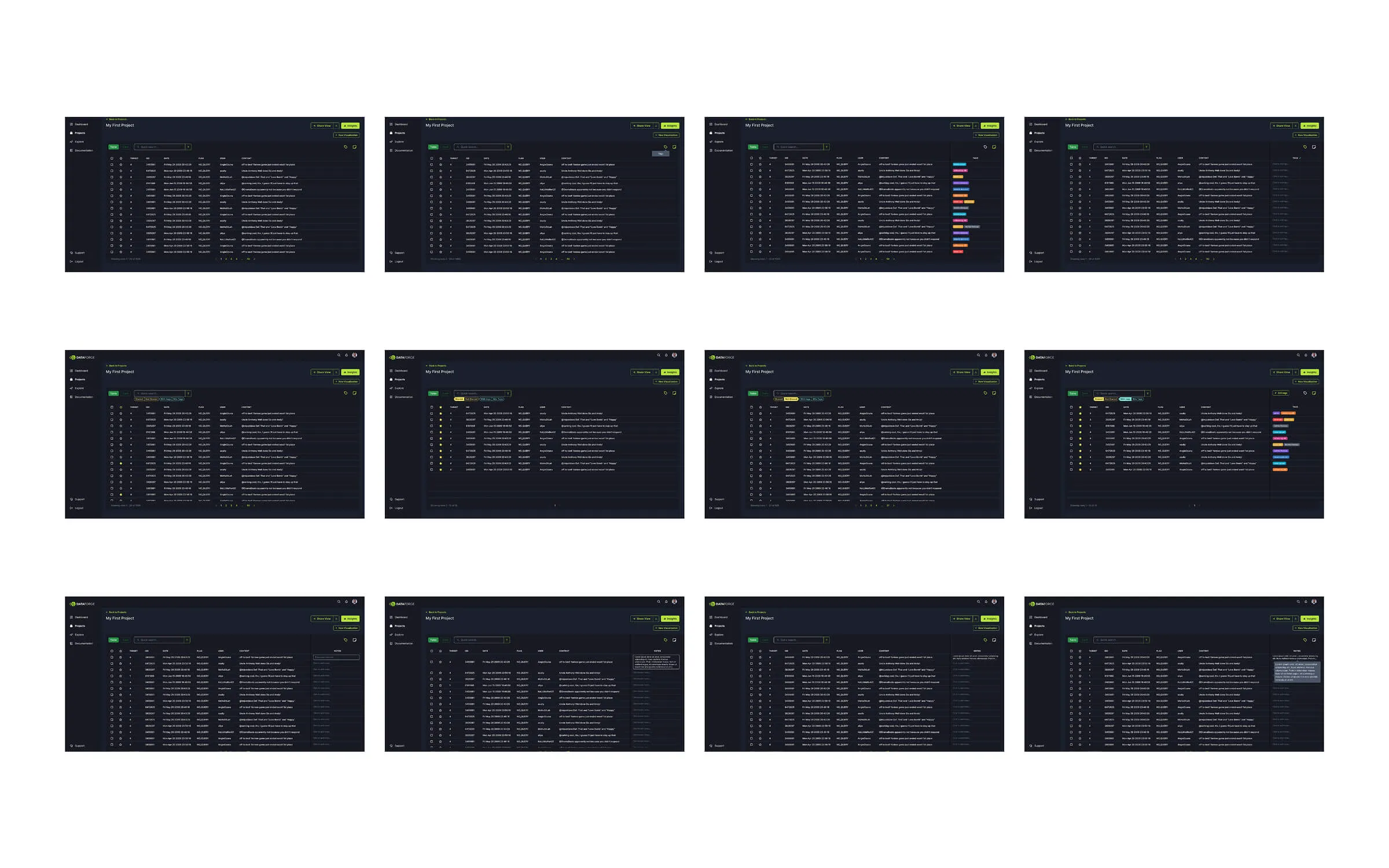
Months later — as the platform expanded — the client returned for support on advanced features. We designed solutions for quick search, filtering, bulk actions, tagging, notes, and LLM-powered data labelling workflows. We also created clear correction flows for improving ground truth data, reducing friction for domain experts and improving model training quality.


The new UX structure gave the engineering team a clear, scalable foundation for future development. Internal teams reported faster onboarding, clearer project setup, and reduced time spent interpreting datasets. The prototype became the reference point for demos, onboarding, and investor conversations.
Working with complex ML tooling reinforced how essential it is to bridge technical depth with user clarity. Modular flows, predictable visual patterns, and consistent language were critical for scalability. The project also highlighted the importance of maintaining flexibility as teams add features across fast-moving ML roadmaps.
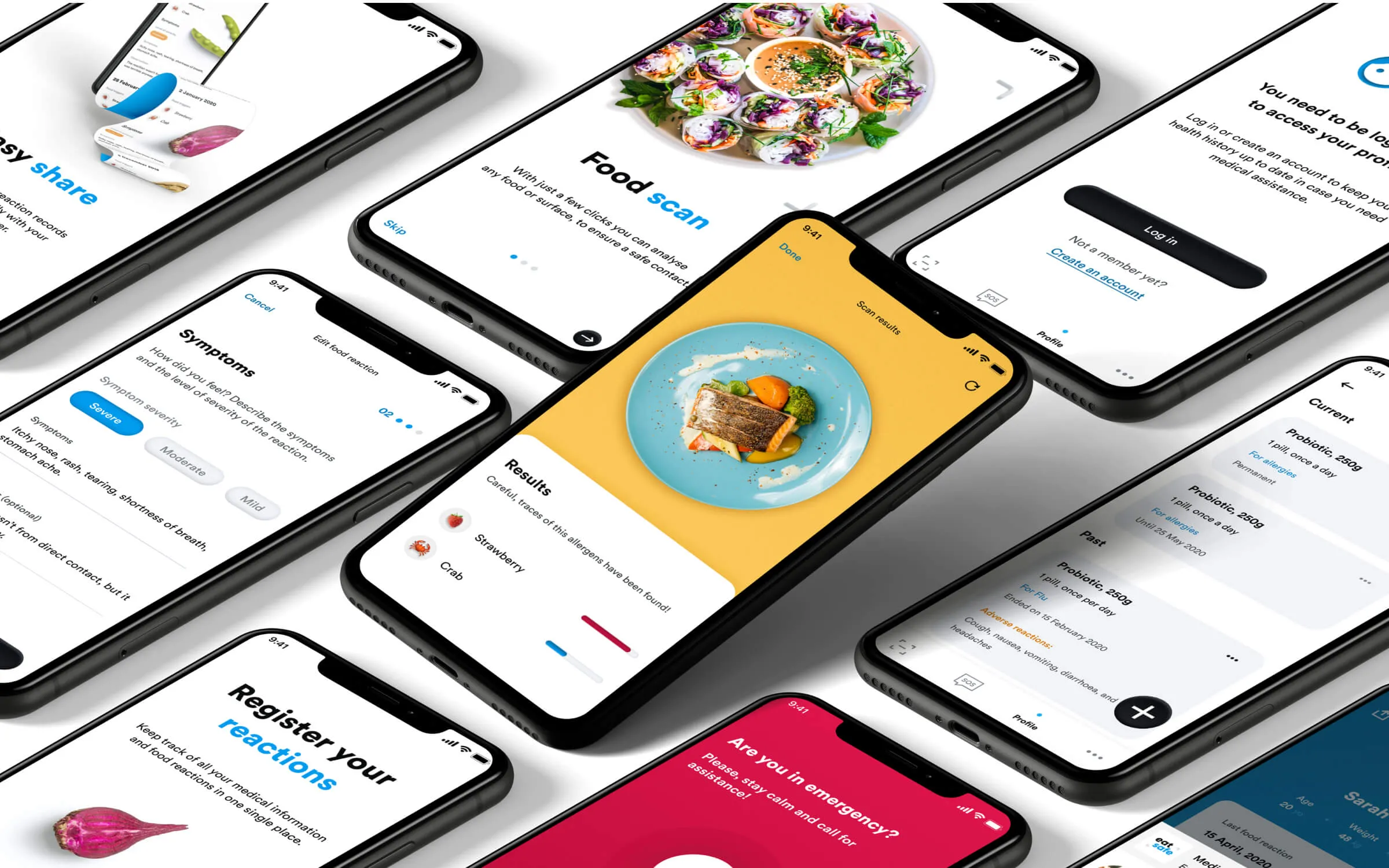
A food-safety app concept helping users scan ingredients, and detect allergens through a health-centred design system.
A luxury furniture site redesigned for clarity, refinement, and personalisation — blending beautiful product stories with a seamless browsing experience.